
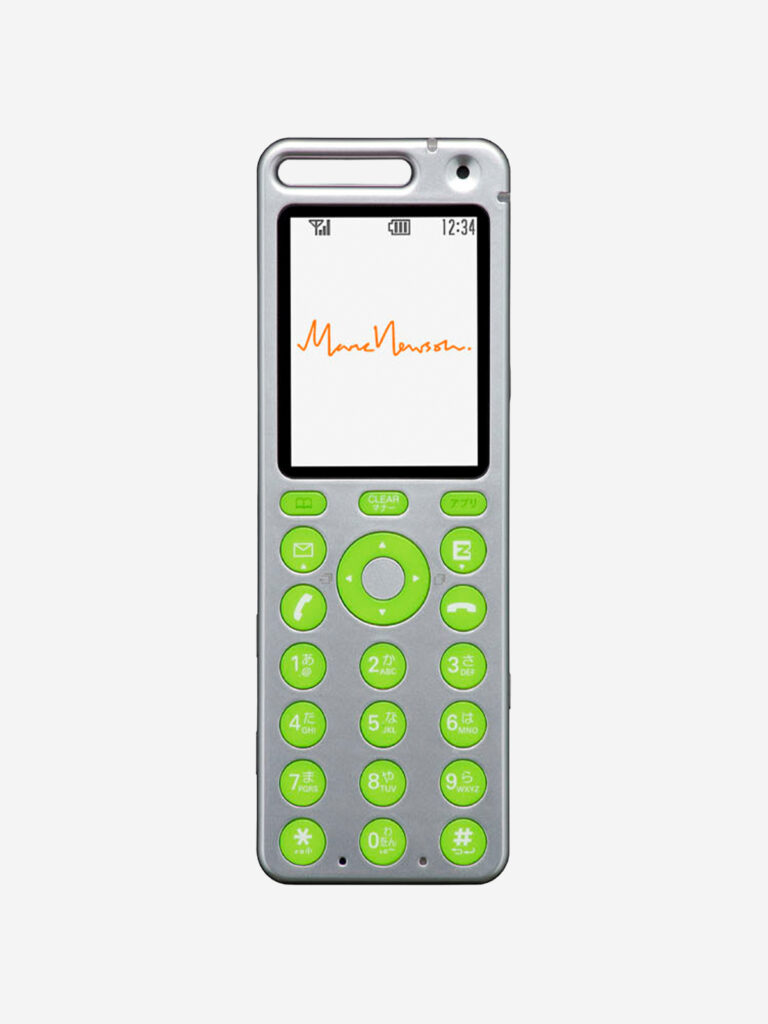
| ANNOUNCEMENT DATE | 2004.10.13 |
| RELEASE DATE | 2004.11.23 |
| Brand | au Design project |
| Type | Production Model |
| Designer | Product: Marc Newson Sound: Nick Wood UI: Brendon Smale |
| Producer | Satoshi Sunahara |
| Manufacturer | SANYO Multimedia Tottori |
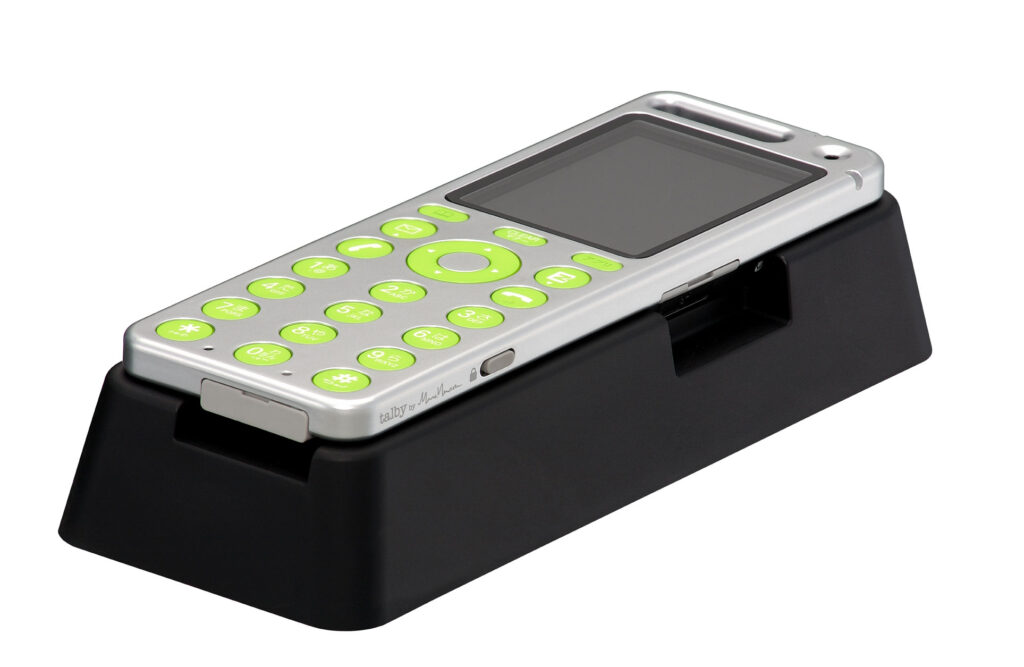
| Size ( W x H x D ) / Weight | 45 × 132 × 13 mm / 79g |
| Materials | Plastic, electronic components |
COLOR VARIATIONS
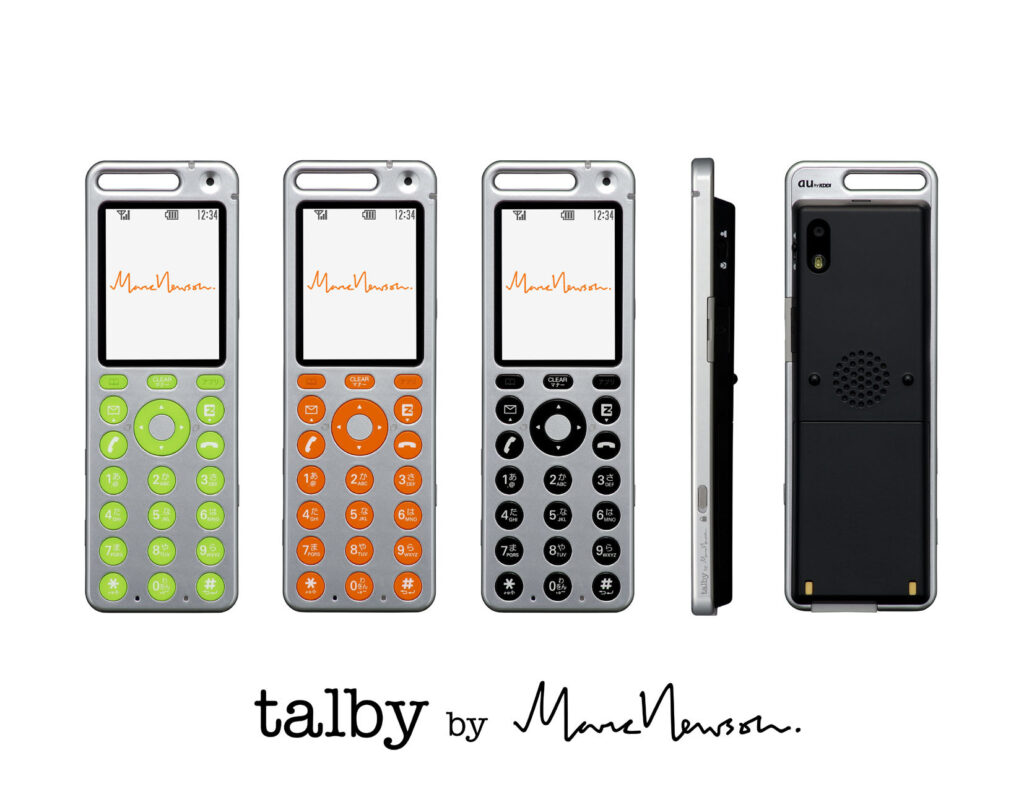
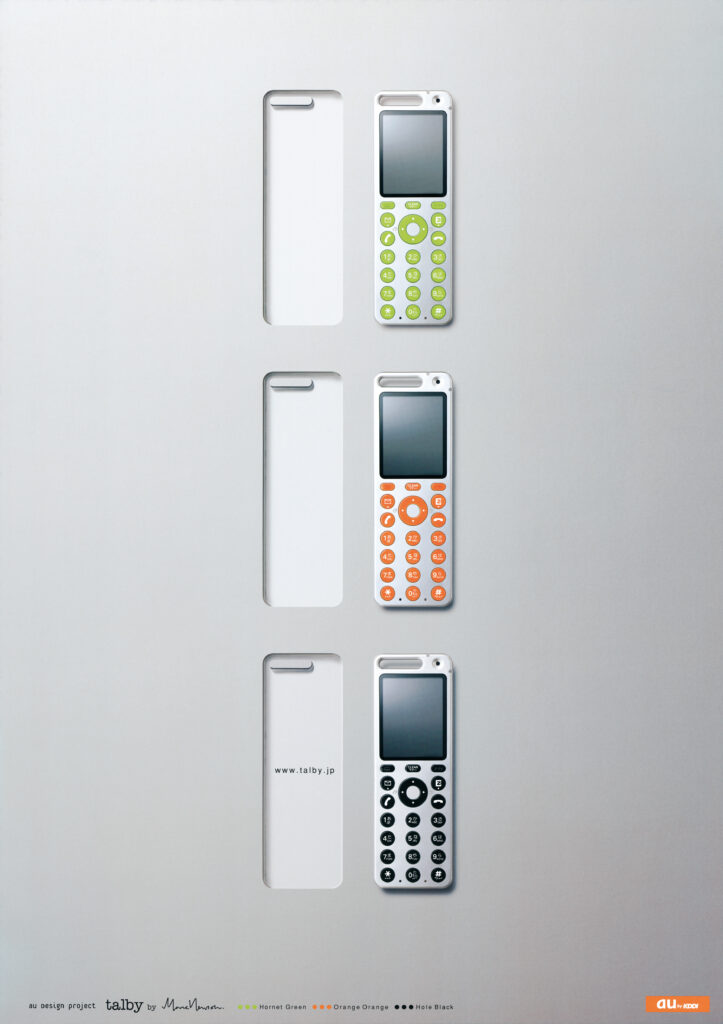
Hornet Green / Orange Orange / Hole Black
AWARDS
- 2004年度グッドデザイン賞 / Good Design Award 2004
- Chicago Athenaeum Good Design 2005 (米 シカゴ建築・デザイン博物館)
MUSEUM COLLECTIONS
- ニューヨーク近代美術館 – MoMA (米・NY)/ The Museum of Modern Art, New York City
- フランス国立現代美術基金 – FNAC(仏・パリ)/ Fonds national d’art contemporain, Paris
- デザインミュージアム(英・ロンドン)/ Design Museum, London
- フィラデルフィア美術館(米・フィラデルフィア)/ Philadelphia Museum of Art
ABOUT
アルミユニボディ
一枚のアルミニウム板を削り出して作られたtalbyコンセプトのユニボディ。当時、切削加工は試作品では用いられても、時間そしてコスト的制約から量産品で採用するのは現実的ではありませんでした。talby 量産化にあたり、talbyコンセプトの美しいユニボディをいかに実現するかが最大の課題でした。アルミプレス加工での再現がまず検討されましたが、側面に継ぎ目が出てしまうことから見送られました。最終的にアルミであることよりもユニボディであることを優先し、樹脂でユニボディ的なフォルムを実現することにしました。量産製品に切削加工を用いる革命を起こしたのはAppleでした。MacBook Air(2008 年)は、アルミ切削加工のユニボディを実現した最初の製品です。当時は、そんな夢のような時代がやってくるとは思いも寄りませんでした。ただ、talbyを片手に「次はAppleと携帯電話のプロジェクトやりたいね」と無邪気に語り、まだ見ぬその姿に思いを馳せていたのでした。
Aluminum Unibody
The talby concept featured a unibody machined from a single piece of aluminum. At the time, machining was commonly used for prototypes, but the time and cost involved made it impractical for mass-produced products. The greatest challenge in bringing talby to production was how to reproduce the concept model’s beautiful unibody construction.
Aluminum press forming was initially considered, but the idea was abandoned because it would have left visible seams along the sides. Ultimately, we decided that preserving the unibody form was more important than using aluminum, and instead created a unibody-like form in resin.
It was Apple that later revolutionized mass production by introducing machining on an industrial scale. The MacBook Air (2008) was the first Apple product to feature a unibody enclosure machined from aluminum. At the time, we could hardly have imagined that such a seemingly dreamlike future would soon become reality.
Still, with talby in hand, we would innocently say to each other, “Next time, it would be great to do a mobile phone project with Apple,” and imagine what such a phone—one that did not yet exist—might look like.

あなたのことは今でも好きです。
でも私たちはきっと
1000回もメールをやりとりして、
たぶん心は1センチくらいしか
近づけませんでした。
I still love you.
We must have exchanged
1000 e-mails.
But our hearts only got closer
by 1 centimeter.
新海誠監督『秒速5センチメートル』とtalby
新海誠監督のアニメーション映画『秒速5センチメートル』(2007年)。第三話には、遠野貴樹と交際していた水野理紗の携帯電話として、au Design projectの「talby」が登場します。
画面に刻まれた日付と時刻、メール、手に取られるtalby。短いカットの積み重ねが、二人の間を流れた時間と、近づけなかった心の距離を静かに伝えます。
人と人をつなぐために生まれたケータイは、ときに、二人のあいだにある距離を映し出すものでもありました。いつでも、どこでも、誰かとつながれるようになった今、私たちの距離は近くなったのでしょうか。
5 Centimeters Per Second and talby
In Makoto Shinkai’s animated film 5 Centimeters Per Second (2007), an au Design project talby appears in the third chapter as the mobile phone used by Risa Mizuno, who was in a relationship with Takaki Tono.
Dates and times on the screen, emails, and a talby in hand. These brief shots quietly convey the time that passed between them̶and the emotional distance they could not close.
Mobile phones were created to connect people, yet sometimes they also revealed the distance between them. Now that we can connect with anyone, anytime, anywhere, have we really grown any closer?
© Makoto Shinkai / CoMix Wave Films