カテゴリー: Production Model

  • PRISMOID

    PRISMOID

    ANNOUNCEMENT DATE2009.09.09
    RELEASE DATE2009.12.01
    Brandiida
    TypeProduction Model
    DesignerNaoto Fukasawa
    ProducerSatoshi Sunahara
    ManufacturerKYOCERA
    Size ( W x H x D ) / Weight49 × 101 × 16.8 mm / 102g
    MaterialsPlastic, electronic components

    COLOR VARIATIONS

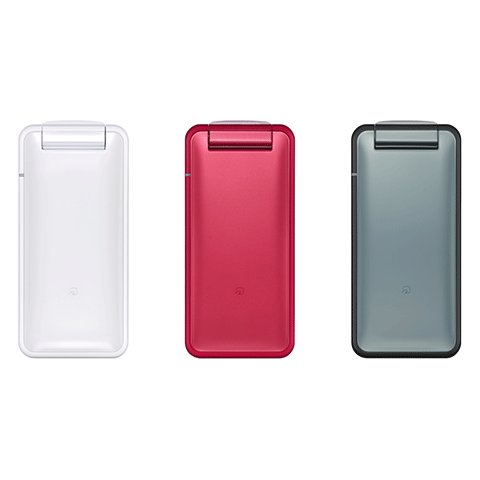
    GREEN / MAT BROWN / WHITE


    AWARDS

    • 2009年度グッドデザイン賞 / Good Design Award 2009

    ABOUT

    未来的未来:80年代デザインへのオマージュ

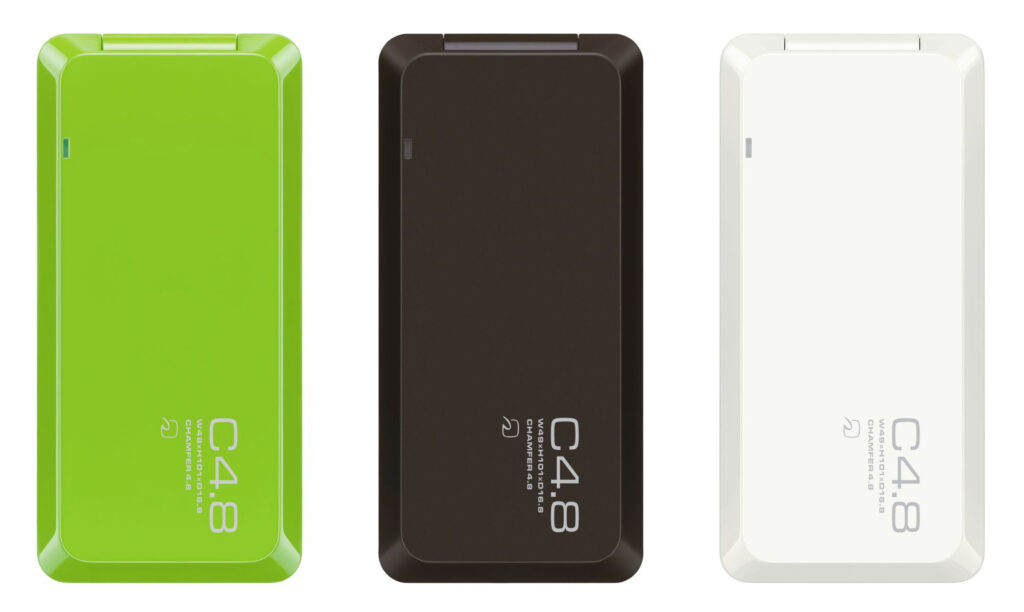
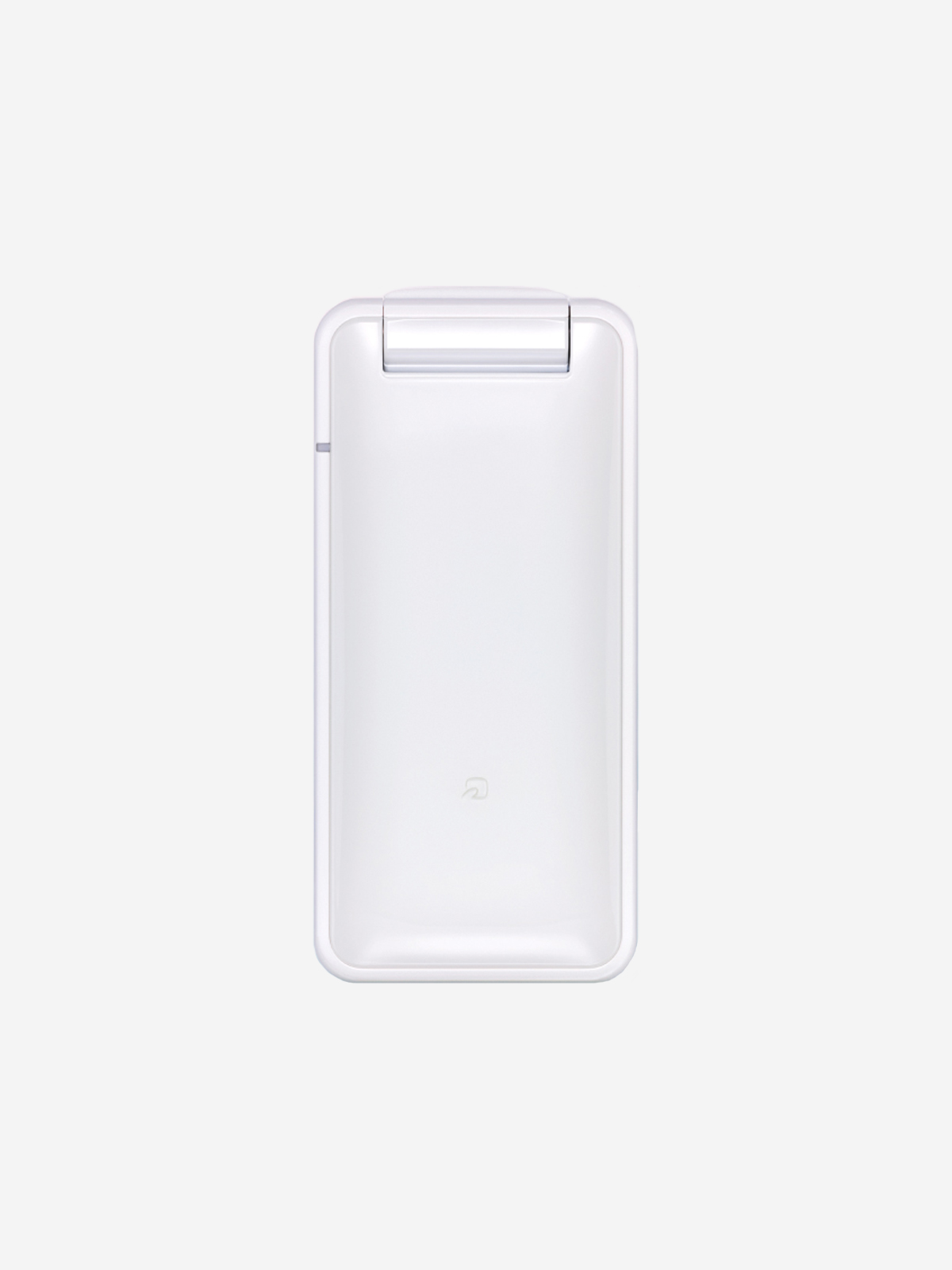
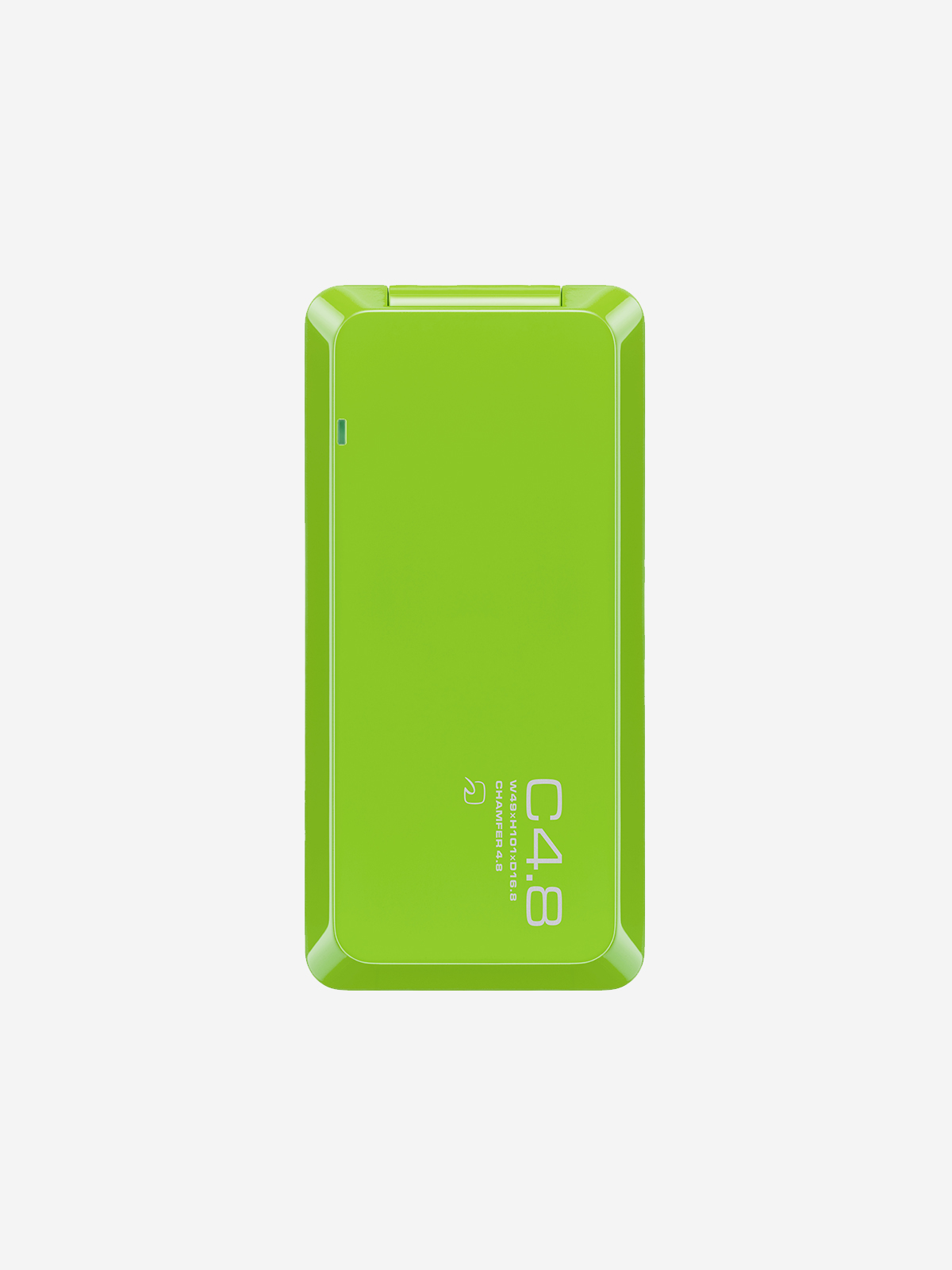
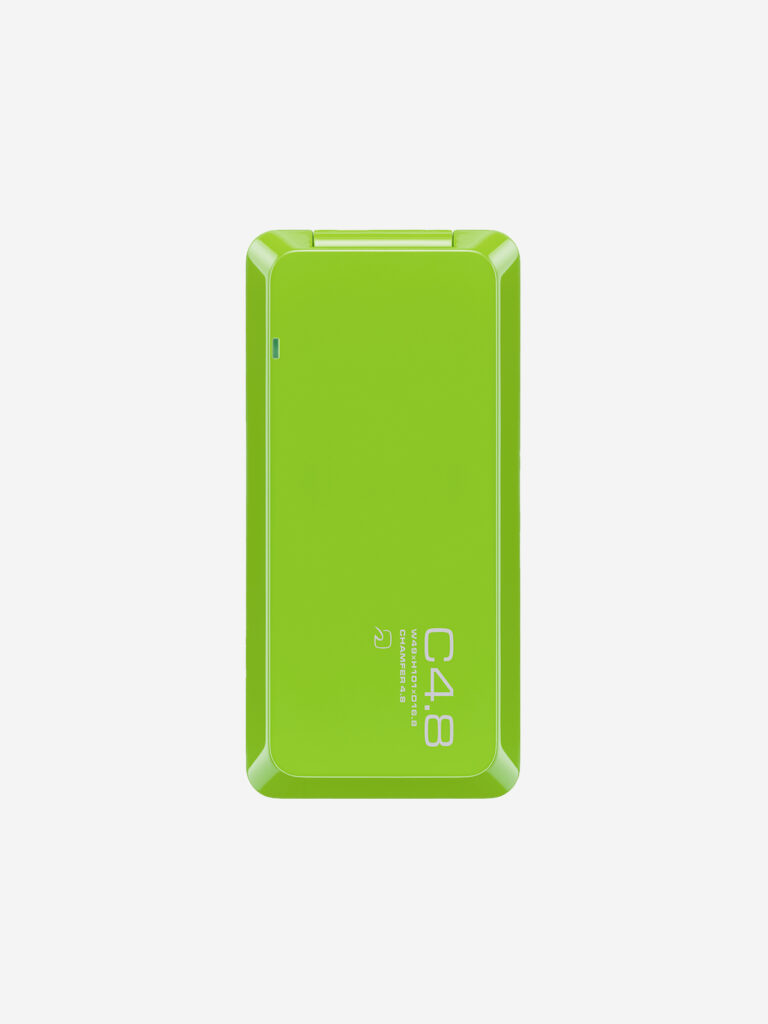
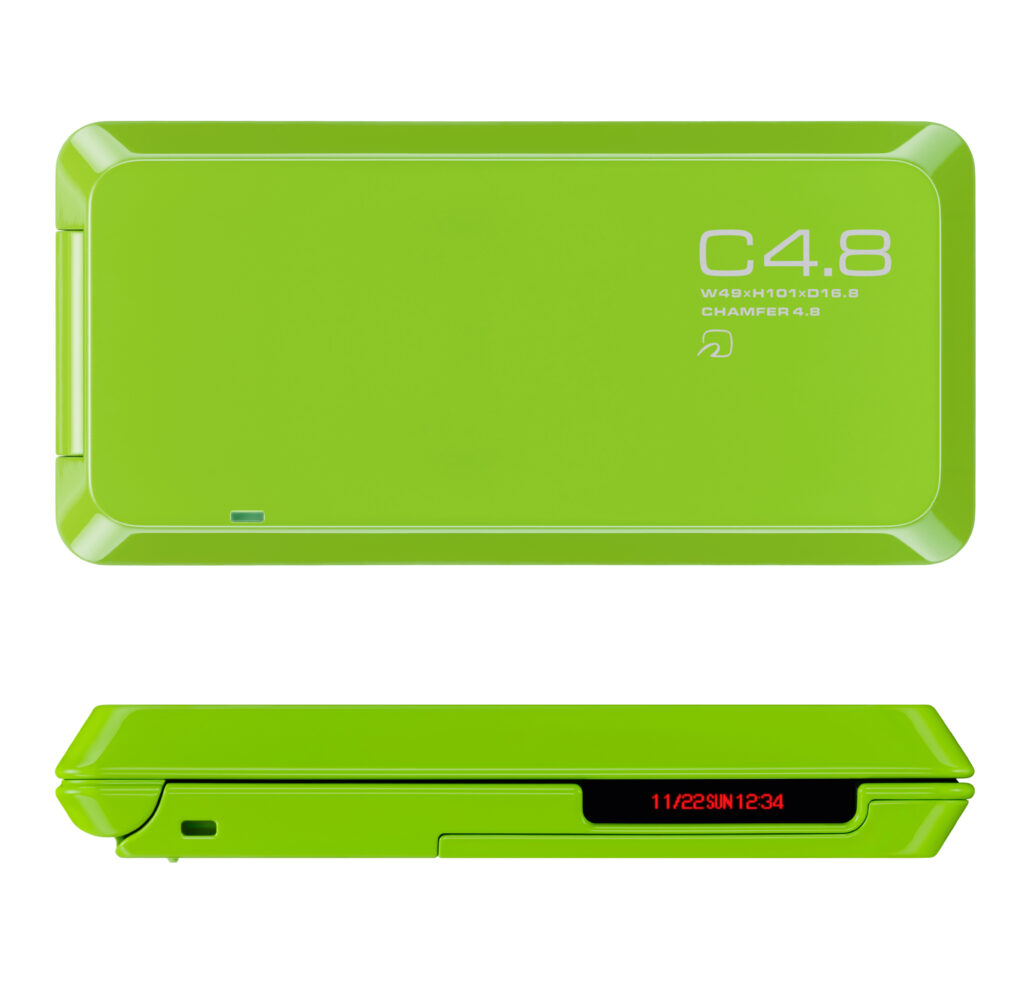
    iida ベーシックモデルの第2 弾。PRISMOID のコンセプト「未来的な未来」には80年代の工業デザインに対するオマージュが込められています。PRISMOID(プリズモイド)は角錐台の意。SF 映画『ブレードランナー』で知られるデザイナー、シド・ミードが描いた未来の車のような平面と曲面で構成された造形。レトロフューチャー感溢れるサイドの赤色LEDディスプレイ。天面には未来的なMicrogrammaフォントでPRISMOID の面取り寸法「C4.8」が大きくあしらわれています。さらにその下には小さく幅・高さ・奥行きを表す数値が書かれています。こうした表現は、80年代の工業製品によく見られたものです。例えばキヤノンの一眼レフT90(1986 年、デザイン:ルイジ・コラーニ)。そのペンタ部には「Canon」「T90」のロゴと「MULTIPLE METERING SYSTEM」「COMPUTERIZED 3 MOTOR CONTROL」という文字列が誇らしげに配置されています。PRISMOIDはシンプル・ミニマルなデザイントレンドの中で、80 年代的デザイン表現の引用という遊び心を備えたユニークな製品でした。

    A Futuristic Future: An Homage to 1980s Design

    PRISMOID was the second model in the iida basic series. Its concept, “A Futuristic Future,” was conceived as an homage to the industrial design of the 1980s.

    The name PRISMOID refers to a truncated pyramid. Its form, composed of flat and curved surfaces, recalls the futuristic vehicles envisioned by Syd Mead, the designer and visual futurist renowned for his work on the science-fiction film Blade Runner. A red LED display on the side further enhances its distinctive retro-futuristic character.

    On the top surface, “C4.8”—the dimension of PRISMOID’s chamfer—is prominently displayed in the futuristic Microgramma typeface. Directly beneath it, smaller figures indicate the phone’s width, height, and depth. This kind of graphic treatment was often seen on industrial products of the 1980s.

    One example is Canon’s T90 SLR camera (1986, designed by Luigi Colani). Its pentaprism housing proudly displays not only the “Canon” and “T90” logos, but also phrases such as “MULTIPLE METERING SYSTEM” and “COMPUTERIZED 3 MOTOR CONTROL.”

    At a time when simple, minimalist design was the prevailing trend, PRISMOID stood out as a unique and playful product, deliberately referencing the visual language of 1980s industrial design.
  • PLY

    PLY

    ANNOUNCEMENT DATE2009.09.09
    RELEASE DATE2009.09.17
    Brandiida
    TypeProduction Model
    DesignerHideo Kanbara
    ProducerSatoshi Sunahara
    ManufacturerTOSHIBA
    Size ( W x H x D ) / Weight53 × 102 × 14.5 mm / 127g
    MaterialsPlastic, electronic components

    COLOR VARIATIONS

    brown / pink / black


    ABOUT


    日本のものづくりが変わりゆく中で

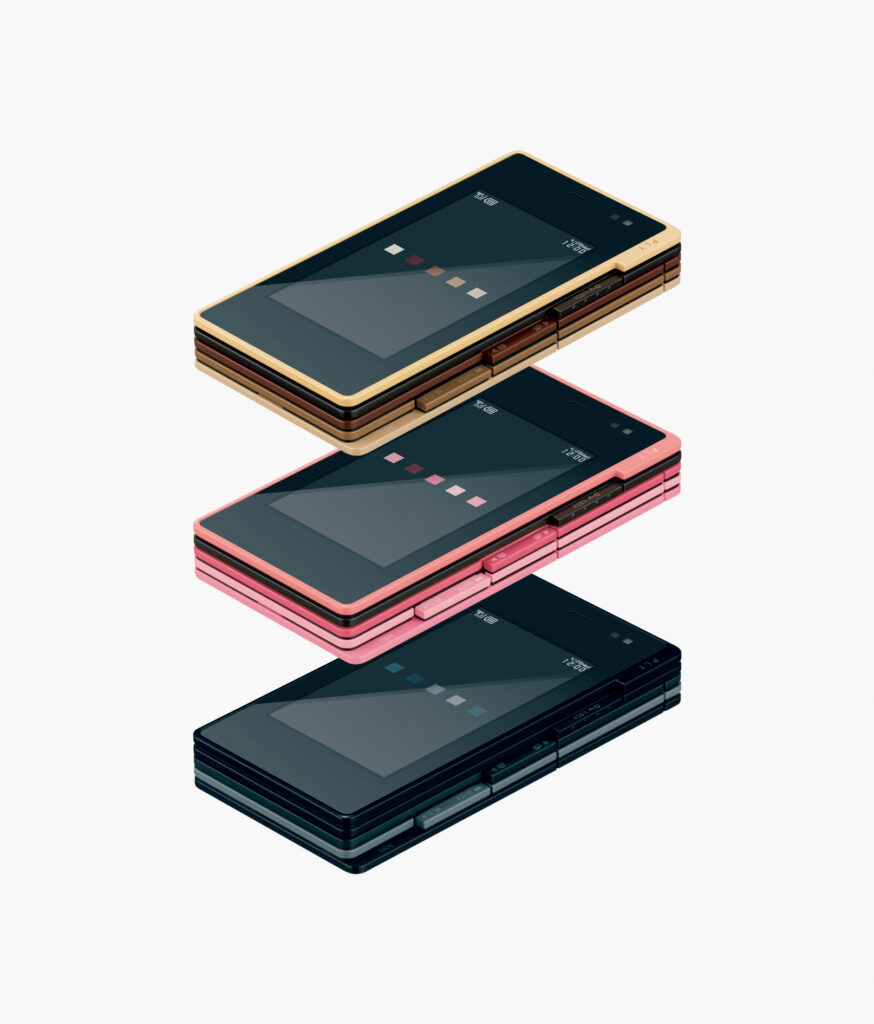
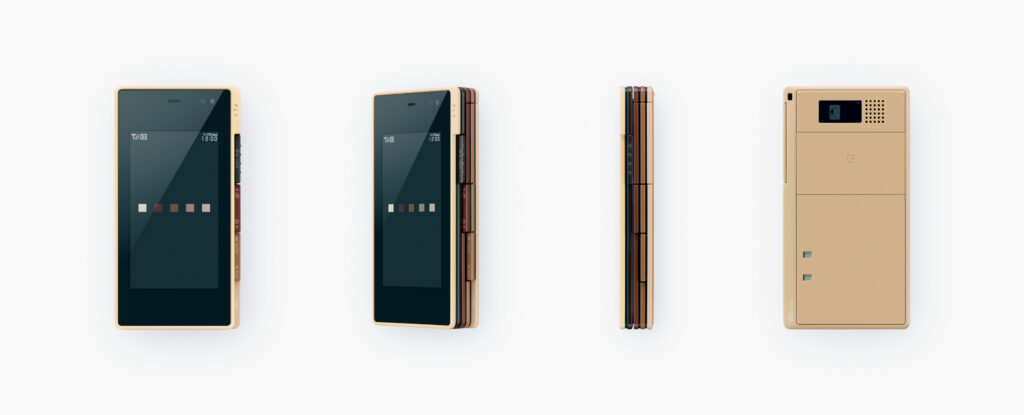
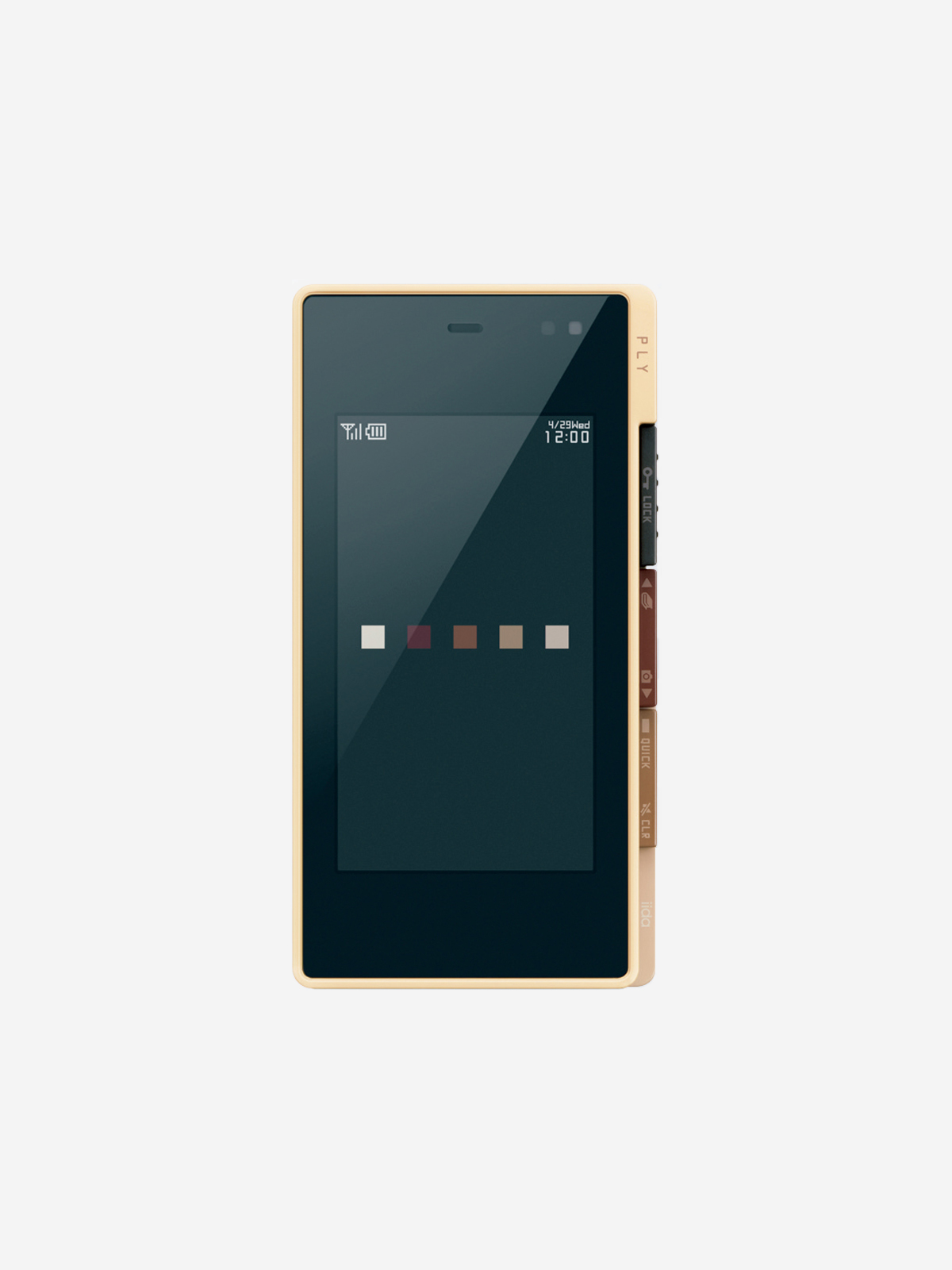
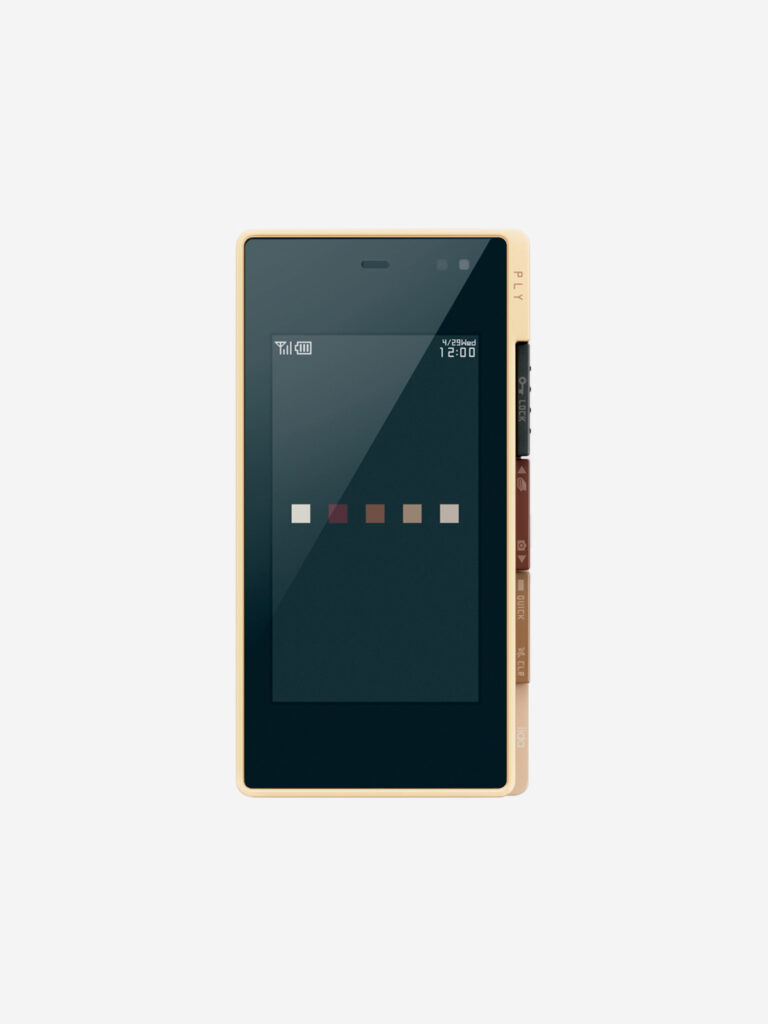
    日本のものづくりが変わりゆく中で量産らしからぬ実に手の込んだ作りで、2008 年に発表したPLYコンセプトの美しい積層構造が再現されています。コンセプトの6層構造は量産では5層となっていますが、マスキング塗装で5 色に塗り分けるのでなく、1 層ごとに独立したパーツで組み立てられ、層と層の間には黒いパーツがはめ込まれています。1 層1 層は細やかに調色され、艶の具合も絶妙にコントロールされています。この徹底したこだわりにより高い精度感と樹脂ならではの温かみを感じることのできる製品に仕上がっています。PLY のデザイナー神原秀夫さんは1978 年生まれ。ポケベル・PHS・ケータイと日本のコミュニケーション文化の転換期を先導したポスト団塊ジュニア世代のデザイナーです。iidaは若手デザイナーを積極的に起用したプロジェクトでもありました。2009 年は、メーカー各社の生産拠点の海外移転が進み、現場の雰囲気も変わり始めていた時代。PLYは東芝が日本国内で製造した最後の携帯電話でした。

    As Japanese Manufacturing Was Changing

    At a time when Japanese manufacturing was undergoing profound change, PLY was produced with an extraordinary level of craftsmanship rarely seen in a mass-produced product, faithfully recreating the beautiful layered structure of the PLY concept unveiled in 2008.

    While the concept model consisted of six layers, the production model was composed of five. Rather than simply painting the body in five colors using masking techniques, each layer was made as a separate component and individually assembled, with black components inserted between the layers. The color of each layer was meticulously adjusted, and even the degree of gloss was precisely controlled. This uncompromising attention to detail resulted in a product that combined a remarkable sense of precision with the distinctive warmth of resin.

    PLY was designed by Hideo Kambara, who was born in 1978. He belongs to the post–second baby boom generation of designers who came of age amid major shifts in Japan’s communication culture—from pagers and PHS to mobile phones. iida was also a project that actively provided opportunities for a new generation of young designers.

    By 2009, Japanese manufacturers were increasingly moving their production bases overseas, and the atmosphere on manufacturing floors was beginning to change. PLY was the last mobile phone manufactured by Toshiba in Japan.


  • 宇宙へ行くときのハンドバッグ Hand Bag for Space Travel

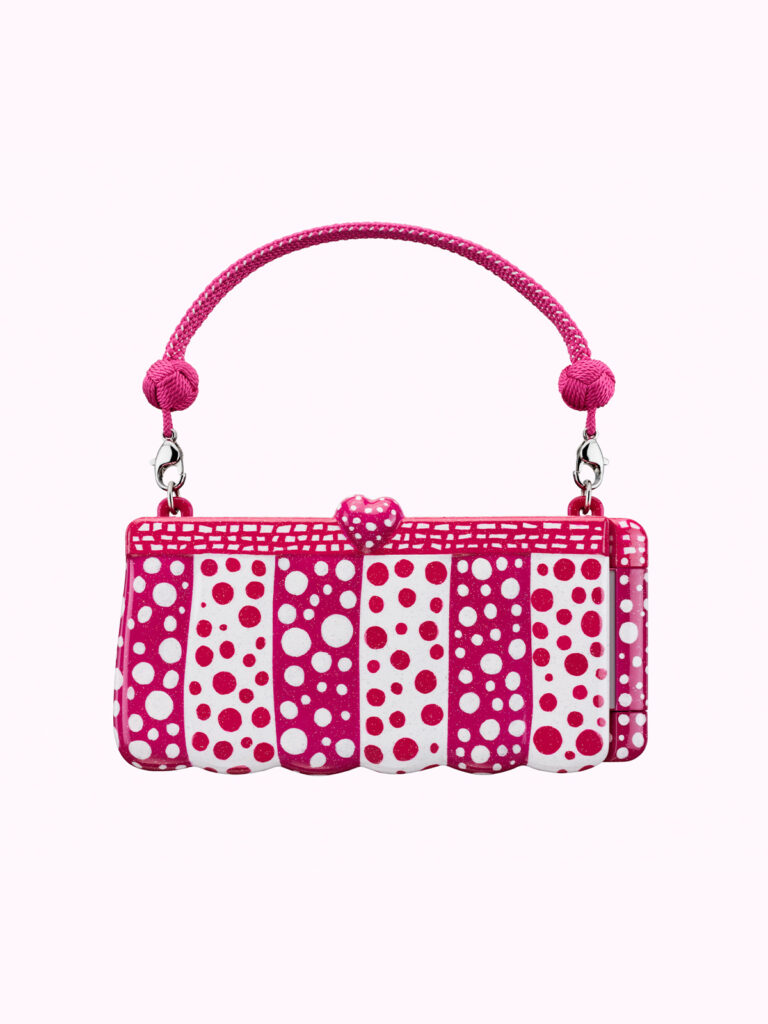
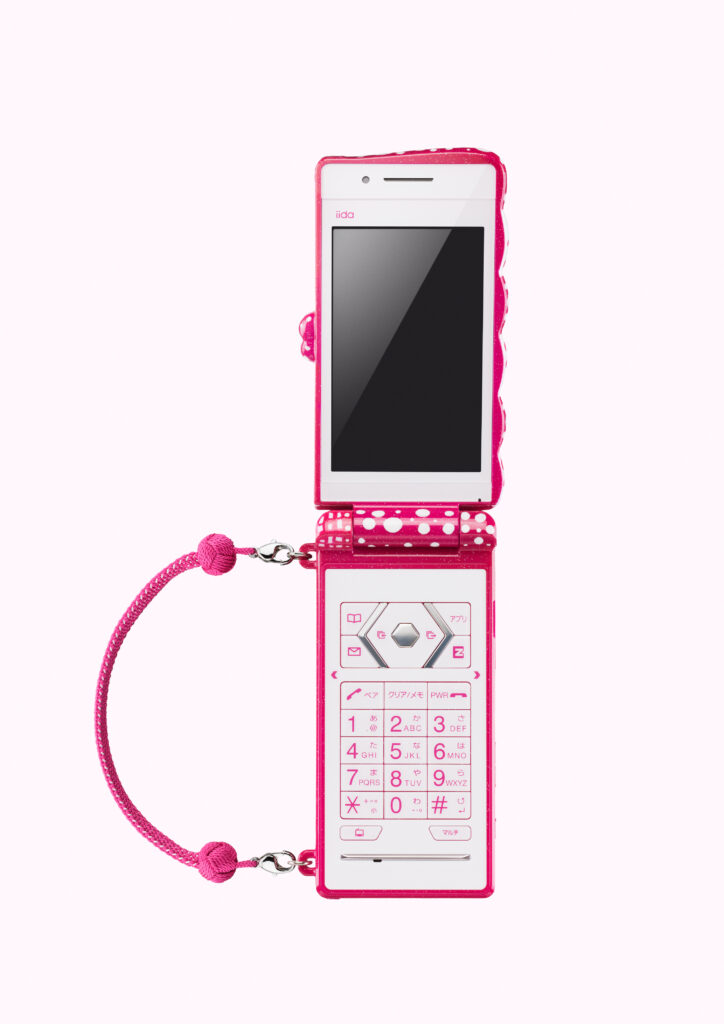
    宇宙へ行くときのハンドバッグ Hand Bag for Space Travel

    ANNOUNCEMENT DATE2009.04.07
    RELEASE DATE2009.07.30
    Brandiida
    TypeProduction Model (Edition 1,000)
    DesignerYayoi Kusama
    ProducerSatoshi Sunahara
    ManufacturerSANYO Multimedia Tottori
    Size ( W x H x D ) 111 × 135 (including a strap)  × 22  mm
    MaterialsPlastic, electronic components
    Strap: Kyo-kumihimo (Kyoto-style braided cords)


    MUSEUM COLLECTIONS

    大分市美術館、草間彌生美術館、KDDI MUSEUM、国立国際美術館、駒ヶ岳高原美術館、静岡県立美術館、栃木県立美術館、和歌山県立近代美術館、原美術館、ワタリウム美術館、十和田市現代美術館、軽井沢現代美術館、フォーエーバー現代美術館、熊本市現代美術館、長野県信濃美術館、宮崎県立美術館、森美術館、埼玉県立近代美術館、ベネッセハウスミュージアム、町田市立国際版画美術館、名古屋市美術館、北九州市立美術館、新潟市美術館、ふくやま美術館、広島市現代美術館、松本市美術館

    Oita Art Museum, Yayoi Kusama Museum, KDDI MUSEUM, The National Museum of Art, Osaka, Komagatake Kogen Museum of Art, Shizuoka Prefectural Museum of Art, Tochigi Prefectural Museum of Fine Arts, The Museum of Modern Art, Wakayama, Hara Museum of Contemporary Art, Watari Museum of Contemporary Art (Watarium), Towada Art Center, Karuizawa New Art Museum, Forever Museum of Contemporary Art, Contemporary Art Museum Kumamoto, Nagano Prefectural Shinano Art Museum, Miyazaki Prefectural Art Museum, Mori Art Museum, The Museum of Modern Art, Saitama, Benesse House Museum, Machida City Museum of Graphic Arts, Nagoya City Art Museum, Kitakyushu Municipal Museum of Art, Niigata City Art Museum, Fukuyama Museum of Art, Hiroshima City Museum of Contemporary Art, Matsumoto City Museum of Art


    ABOUT

    「魂を揺さぶる」機能を搭載した携帯電話

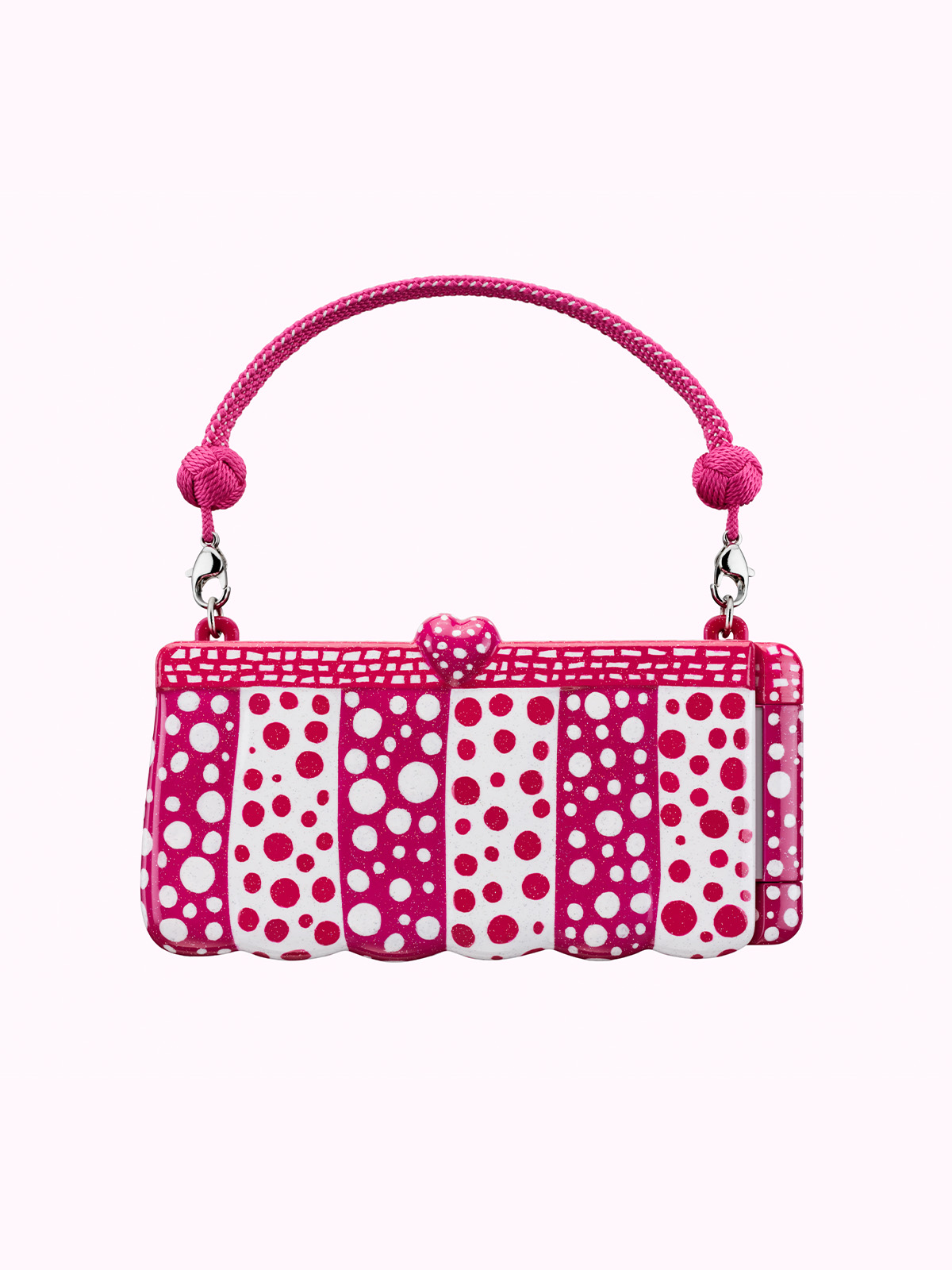
    来場者数52万人と盛況を博した草間彌生展「わが永遠の魂」(2017 年2 月22日~ 5 月22日、国立新美術館)。iida Art Editions YAYOI KUSAMAの発表から8 年、草間さんの人気はますます高まるばかりです。草間彌生スタジオに初めてコンタクトさせていただいたのは2008年のこと。アクセサリーでなくアート作品としてであればという条件で私たちの依頼を引き受けていただきました。プロダクトとして機能するアート。アートとして機能するプロダクト。いくつかの候補の中から「リンリン」「ハンドバッグ」「ドッツ・オブセッション」の三つに絞られました。これらを「魂を揺さぶる」力を有した携帯電話に仕立てるには、携帯電話開発の常識では考えられない設計・製造プロセスに挑戦する必要がありました。アート作品でありながら、携帯電話として求められる落下耐久性などの品質基準をクリアしなければならなかったのです。試行錯誤の連続を経て、アートとしての強度とプロダクトとしての強度を実現した類い稀な携帯電話は生まれたのでした。

    A Mobile Phone with a “Soul-Stirring” Function

    Yayoi Kusama’s exhibition My Eternal Soul (February 22–May 22, 2017, The National Art Center, Tokyo) was a tremendous success, attracting 520,000 visitors. Eight years after the launch of iida Art Editions YAYOI KUSAMA, Kusama’s popularity has only continued to grow.

    We first contacted Yayoi Kusama Studio in 2008. They agreed to our proposal on the condition that what we created would be a work of art, rather than an accessory.

    Art that functions as a product.
    A product that functions as art.

    From several concepts, we narrowed the selection down to three: Rinrin, Handbag, and Dots Obsession.

    To transform these works into mobile phones endowed with the power to “stir the soul,” we had to take on design and manufacturing processes that went far beyond the conventions of mobile phone development. Although they were works of art, they still had to meet the rigorous quality standards required of mobile phones, including resistance to damage from being dropped.

    After a long process of trial and error, we succeeded in creating truly exceptional mobile phones that combined the integrity of works of art with the durability of industrial products.

  • ドッツ・オブセッション、水玉で幸福いっぱい Dots Obsession, Full Happiness with Dots

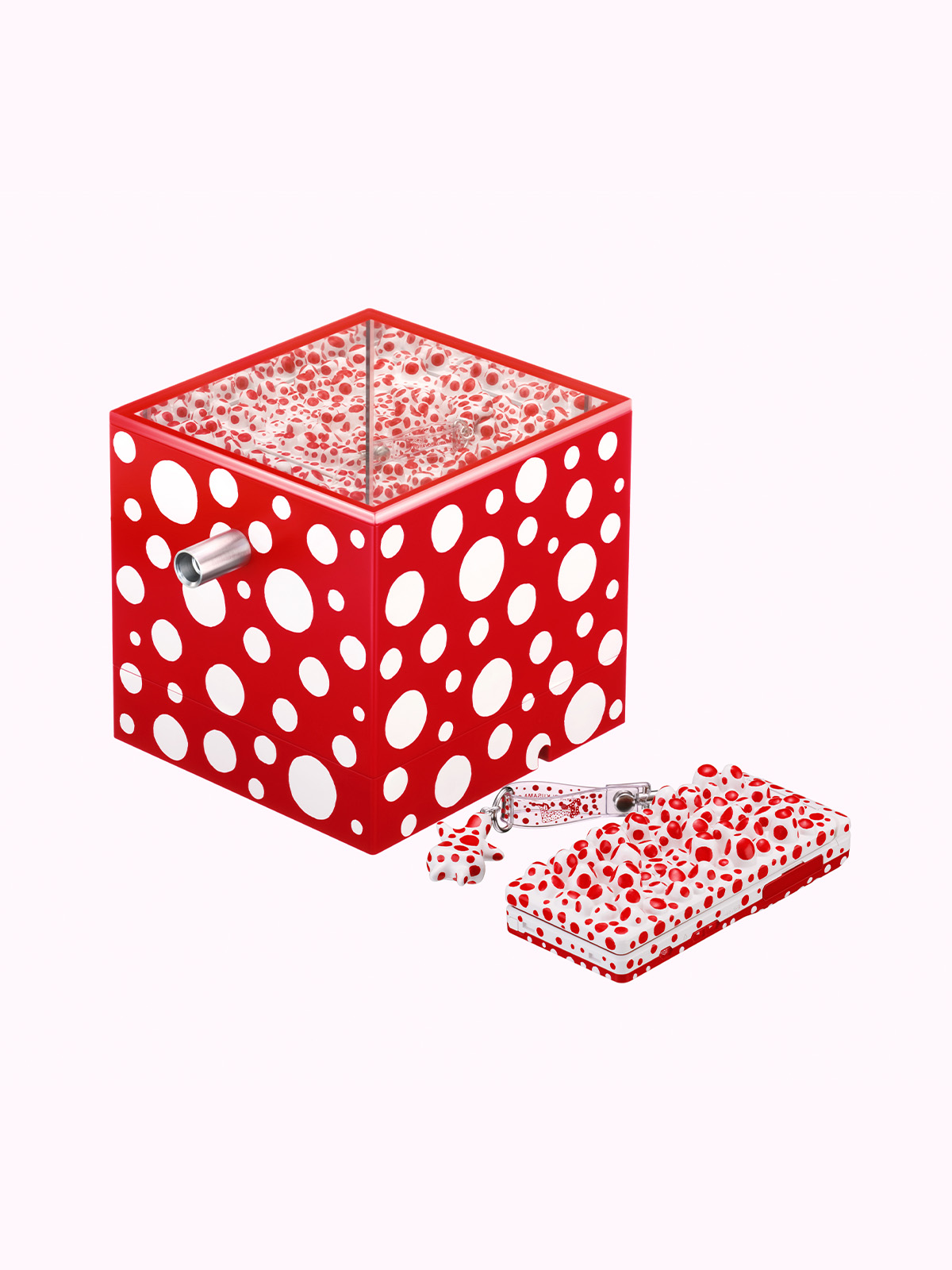
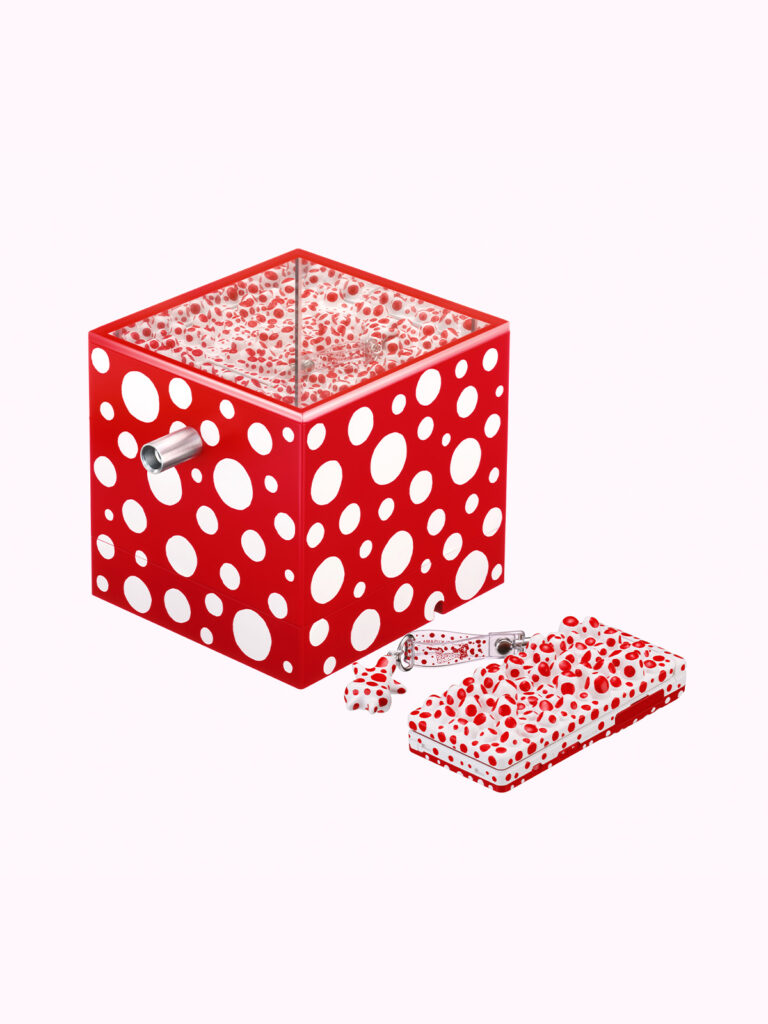
    ドッツ・オブセッション、水玉で幸福いっぱい Dots Obsession, Full Happiness with Dots

    ANNOUNCEMENT DATE2009.04.07
    RELEASE DATE2009.07.30
    Brandiida
    TypeProduction Model (Edition 100)
    DesignerYayoi Kusama
    ProducerSatoshi Sunahara
    ManufacturerTOSHIBA
    Size ( W x H x D ) / WeightBox: 140 × 150 × 150 (180 including a scope)  mm
    MaterialsBox: ABS resin, acrylic mirror, aluminum (scope)
    Mobile phone: Plastic, electronic components

    MUSEUM COLLECTIONS

    大分市美術館、草間彌生美術館、KDDI MUSEUM、国立国際美術館、駒ヶ岳高原美術館、静岡県立美術館、栃木県立美術館、和歌山県立近代美術館、原美術館、ワタリウム美術館、十和田市現代美術館、軽井沢現代美術館、フォーエーバー現代美術館、熊本市現代美術館、長野県信濃美術館、宮崎県立美術館、森美術館、埼玉県立近代美術館、ベネッセハウスミュージアム、町田市立国際版画美術館、名古屋市美術館、北九州市立美術館、新潟市美術館、ふくやま美術館、広島市現代美術館、松本市美術館

    Oita Art Museum, Yayoi Kusama Museum, KDDI MUSEUM, The National Museum of Art, Osaka, Komagatake Kogen Museum of Art, Shizuoka Prefectural Museum of Art, Tochigi Prefectural Museum of Fine Arts, The Museum of Modern Art, Wakayama, Hara Museum of Contemporary Art, Watari Museum of Contemporary Art (Watarium), Towada Art Center, Karuizawa New Art Museum, Forever Museum of Contemporary Art, Contemporary Art Museum Kumamoto, Nagano Prefectural Shinano Art Museum, Miyazaki Prefectural Art Museum, Mori Art Museum, The Museum of Modern Art, Saitama, Benesse House Museum, Machida City Museum of Graphic Arts, Nagoya City Art Museum, Kitakyushu Municipal Museum of Art, Niigata City Art Museum, Fukuyama Museum of Art, Hiroshima City Museum of Contemporary Art, Matsumoto City Museum of Art


    ABOUT

    「魂を揺さぶる」機能を搭載した携帯電話

    来場者数52万人と盛況を博した草間彌生展「わが永遠の魂」(2017 年2 月22日~ 5 月22日、国立新美術館)。iida Art Editions YAYOI KUSAMAの発表から8年、草間さんの人気はますます高まるばかりです。草間彌生スタジオに初めてコンタクトさせていただいたのは2008年のこと。アクセサリーでなくアート作品としてであればという条件で私たちの依頼を引き受けていただきました。プロダクトとして機能するアート。アートとして機能するプロダクト。いくつかの候補の中から「リンリン」「ハンドバッグ」「ドッツ・オブセッション」の三つに絞られました。これらを「魂を揺さぶる」力を有した携帯電話に仕立てるには、携帯電話開発の常識では考えられない設計・製造プロセスに挑戦する必要がありました。アート作品でありながら、携帯電話として求められる落下耐久性などの品質基準をクリアしなければならなかったのです。試行錯誤の連続を経て、アートとしての強度とプロダクトとしての強度を実現した類い稀な携帯電話は生まれたのでした。

    A Mobile Phone with a “Soul-Stirring” Function

    Yayoi Kusama’s exhibition My Eternal Soul (February 22–May 22, 2017, The National Art Center, Tokyo) was a tremendous success, attracting 520,000 visitors. Eight years after the launch of iida Art Editions YAYOI KUSAMA, Kusama’s popularity has only continued to grow.

    We first contacted Yayoi Kusama Studio in 2008. They agreed to our proposal on the condition that what we created would be a work of art, rather than an accessory.

    Art that functions as a product.
    A product that functions as art.

    From several concepts, we narrowed the selection down to three: Rinrin, Handbag, and Dots Obsession.

    To transform these works into mobile phones endowed with the power to “stir the soul,” we had to take on design and manufacturing processes that went far beyond the conventions of mobile phone development. Although they were works of art, they still had to meet the rigorous quality standards required of mobile phones, including resistance to damage from being dropped.

    After a long process of trial and error, we succeeded in creating truly exceptional mobile phones that combined the integrity of works of art with the durability of industrial products.

  • 私の犬のリンリン My Doggie Ring-Ring

    私の犬のリンリン My Doggie Ring-Ring

    ANNOUNCEMENT DATE2009.04.07
    RELEASE DATE2009.07.30
    Brandiida
    TypeProduction Model (Edition 100)
    DesignerYayoi Kusama
    ProducerSatoshi Sunahara
    ManufacturerTOSHIBA / Apex
    Size ( W x H x D ) Ring-Ring: 270 × 196 × 108 mm
    Mobile phone: 50 × 108 × 17.3 mm
    MaterialsRing-Ring: Polyurethane Resin
    Mobile phone: Plastic, electronic components


    MUSEUM COLLECTIONS

    大分市美術館、草間彌生美術館、KDDI MUSEUM、国立国際美術館、駒ヶ岳高原美術館、静岡県立美術館、栃木県立美術館、和歌山県立近代美術館、原美術館、ワタリウム美術館、十和田市現代美術館、軽井沢現代美術館、フォーエーバー現代美術館、熊本市現代美術館、長野県信濃美術館、宮崎県立美術館、森美術館、埼玉県立近代美術館、ベネッセハウスミュージアム、町田市立国際版画美術館、名古屋市美術館、北九州市立美術館、新潟市美術館、ふくやま美術館、広島市現代美術館、松本市美術館

    Oita Art Museum, Yayoi Kusama Museum, KDDI MUSEUM, The National Museum of Art, Osaka, Komagatake Kogen Museum of Art, Shizuoka Prefectural Museum of Art, Tochigi Prefectural Museum of Fine Arts, The Museum of Modern Art, Wakayama, Hara Museum of Contemporary Art, Watari Museum of Contemporary Art (Watarium), Towada Art Center, Karuizawa New Art Museum, Forever Museum of Contemporary Art, Contemporary Art Museum Kumamoto, Nagano Prefectural Shinano Art Museum, Miyazaki Prefectural Art Museum, Mori Art Museum, The Museum of Modern Art, Saitama, Benesse House Museum, Machida City Museum of Graphic Arts, Nagoya City Art Museum, Kitakyushu Municipal Museum of Art, Niigata City Art Museum, Fukuyama Museum of Art, Hiroshima City Museum of Contemporary Art, Matsumoto City Museum of Art


    ABOUT

    「魂を揺さぶる」機能を搭載した携帯電話

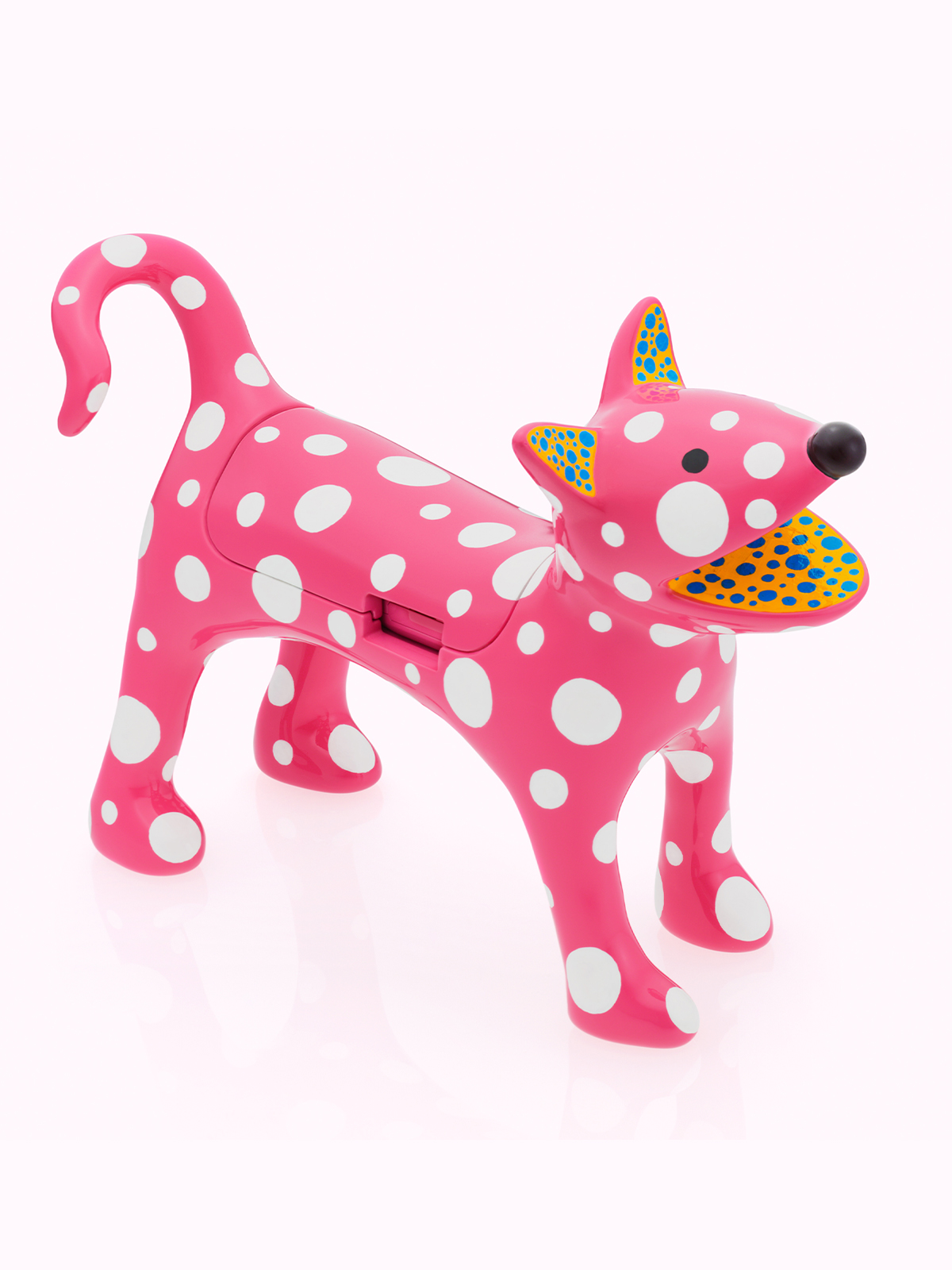
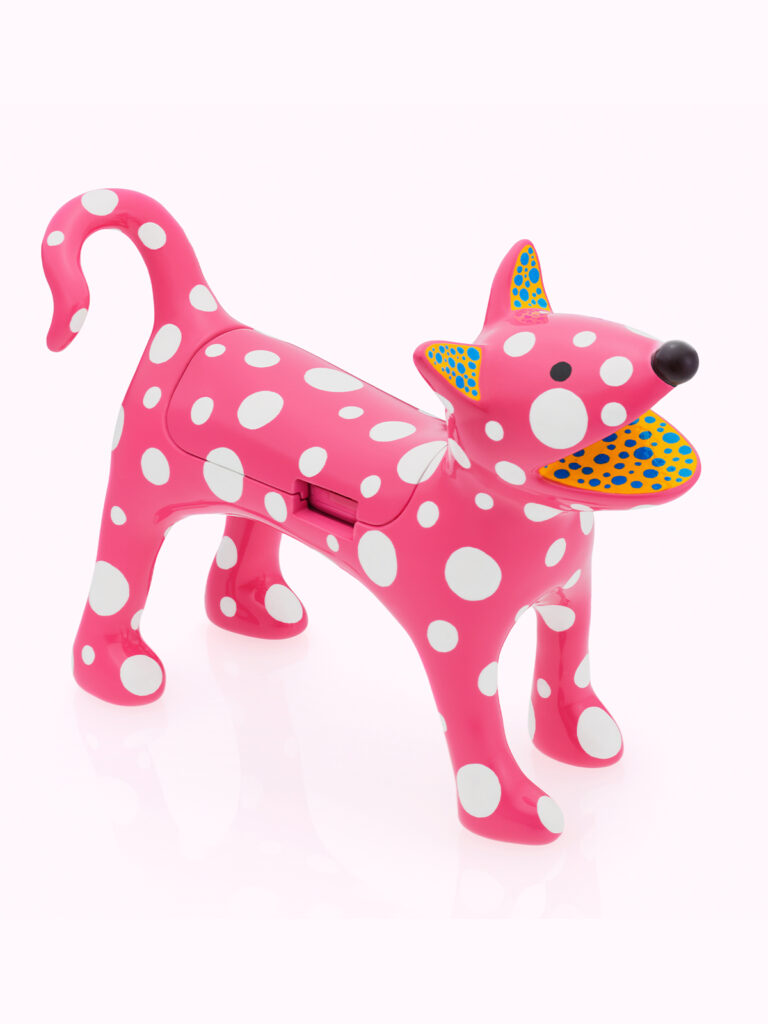
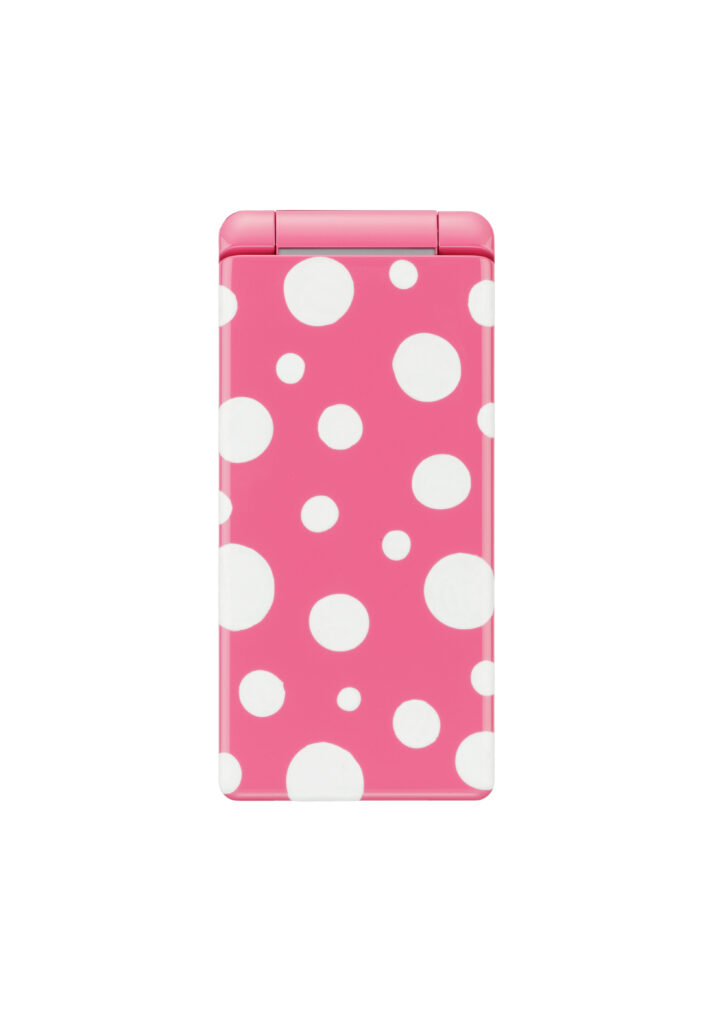
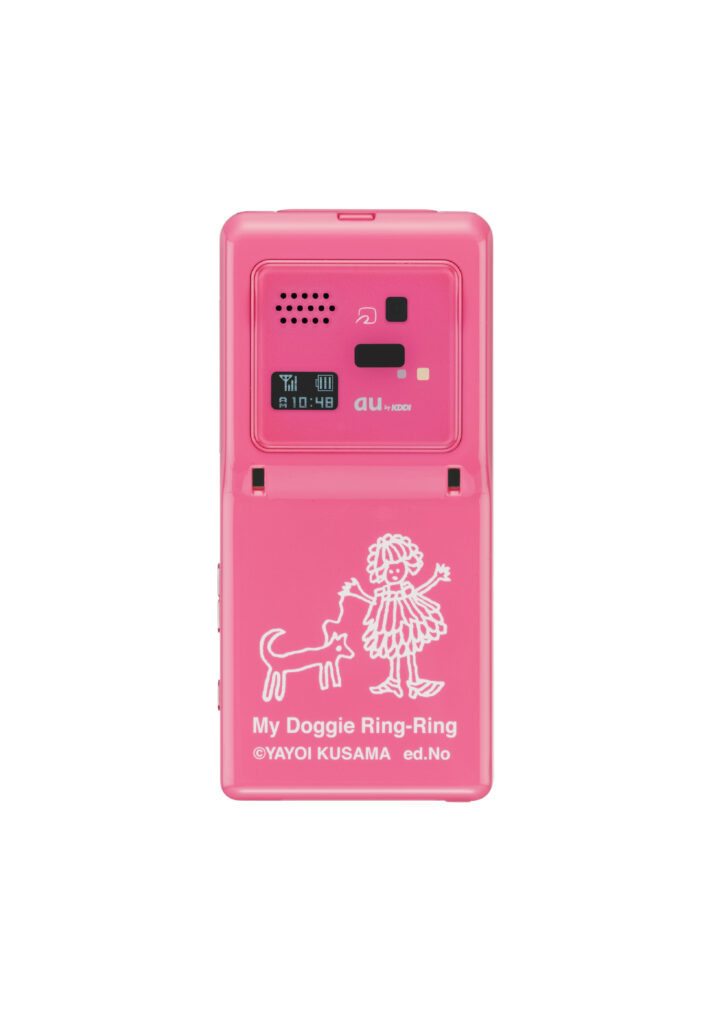
    来場者数52万人と盛況を博した草間彌生展「わが永遠の魂」(2017 年2 月22日~ 5 月22日、国立新美術館)。iida Art Editions YAYOI KUSAMAの発表から8年、草間さんの人気はますます高まるばかりです。草間彌生スタジオに初めてコンタクトさせていただいたのは2008年のこと。アクセサリーでなくアート作品としてであればという条件で私たちの依頼を引き受けていただきました。プロダクトとして機能するアート。アートとして機能するプロダクト。いくつかの候補の中から「リンリン」「ハンドバッグ」「ドッツ・オブセッション」の三つに絞られました。これらを「魂を揺さぶる」力を有した携帯電話に仕立てるには、携帯電話開発の常識では考えられない設計・製造プロセスに挑戦する必要がありました。アート作品でありながら、携帯電話として求められる落下耐久性などの品質基準をクリアしなければならなかったのです。試行錯誤の連続を経て、アートとしての強度とプロダクトとしての強度を実現した類い稀な携帯電話は生まれたのでした。

    A Mobile Phone with a “Soul-Stirring” Function

    Yayoi Kusama’s exhibition My Eternal Soul (February 22–May 22, 2017, The National Art Center, Tokyo) was a tremendous success, attracting 520,000 visitors. Eight years after the launch of iida Art Editions YAYOI KUSAMA, Kusama’s popularity has only continued to grow.

    We first contacted Yayoi Kusama Studio in 2008. They agreed to our proposal on the condition that what we created would be a work of art, rather than an accessory.

    Art that functions as a product.
    A product that functions as art.

    From several concepts, we narrowed the selection down to three: Rinrin, Handbag, and Dots Obsession.

    To transform these works into mobile phones endowed with the power to “stir the soul,” we had to take on design and manufacturing processes that went far beyond the conventions of mobile phone development. Although they were works of art, they still had to meet the rigorous quality standards required of mobile phones, including resistance to damage from being dropped.

    After a long process of trial and error, we succeeded in creating truly exceptional mobile phones that combined the integrity of works of art with the durability of industrial products.

  • misora

    misora

    ANNOUNCEMENT DATE2009.04.07
    RELEASE DATE2009.06.27
    Brandiida
    TypeProduction Model
    DesignerYoshitaka Mukai
    ProducerSatoshi Sunahara
    ManufacturerKYOCERA
    Size ( W x H x D ) / Weight48 × 103 × 19.9 mm / 122g
    MaterialsPlastic, electronic components

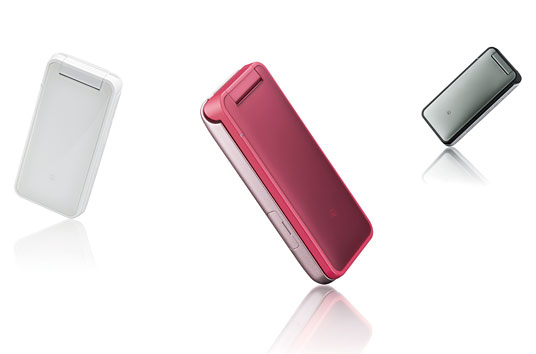
    COLOR VARIATIONS

    white / pink / black


    ABOUT

    制度とデザイン

    2007 年9月、総務省のモバイルビジネス研究会報告書にて、通信料金と端末価格を明確に分離したビジネスモデルを導入する方針が示されました。店頭では端末本来の価格が表示されることになり、いわゆる「1 円ケータイ」や「0 円ケータイ」は姿を消していきました。こうした中で、シンプルな機能・低価格・高いデザイン性の三拍子が揃ったiidaのベーシックモデルが企画されました。その第1 弾がmisoraです。au Design project 草創期を共に歩んだ小牟田啓博さん率いるKom&Co.Design 所属(当時)の迎義孝さんがデザインを手がけました。misoraの名は「水」と「空」を組み合わせた造語で、その名にふさわしく澄んだクリーンなデザインが特徴です。misora 発売と時を同じくしてiPhone 3GSがソフトバンクから発売され、ケータイとiPhoneを2 台持ちするアーリーアダプター層が増えていった時代でした。

    Policy and Design

    In September 2007, a report by the Ministry of Internal Affairs and Communications’ Mobile Business Study Groupset out a policy calling for the introduction of a business model that clearly separated mobile service charges from handset prices. As a result, the actual price of handsets began to be displayed at retail stores, and the so-called “¥1 phones” and “¥0 phones” gradually disappeared from the market.

    Against this backdrop, iida conceived a line of basic models that combined three qualities: simple functionality, affordability, and sophisticated design. The first of these was misora.
    The design was created by Yoshitaka Mukae, then at Kom&Co.Design, led by Yoshihiro Komuta, who had been involved with the au Design project since its earliest days. The name misora is a coined word combining the Japanese words for “water” (mizu) and “sky” (sora), reflecting the phone’s clear, pure design.
    Around the same time that misora was released, the iPhone 3GS went on sale in Japan through SoftBank, marking an era when a growing number of early adopters began carrying two devices—a conventional mobile phone and an iPhone.


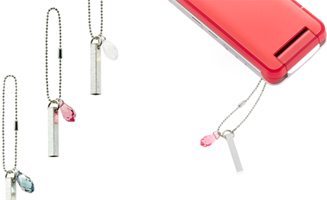
    AROMA STRAP
  • G9

    G9

    ANNOUNCEMENT DATE2009.04.07
    RELEASE DATE2009.04.17
    Brandiida
    TypeProduction Model
    DesignerIchiro Iwasaki
    ProducerSatoshi Sunahara
    ManufacturerSony Ericsson
    Size ( W x H x D ) / Weight50 × 115 × 17.4(maximum thickness 18.1) mm / 128g
    MaterialsFrame: Stainless steel with a thin-film titanium compound coating
    Bottom key button: Anodized aluminum
    Body: plasitc, electronic components

    COLOR VARIATIONS

    mirror + pink / black + green / titanium + silver


    AWARDS

    • 2009年度グッドデザイン賞 / Good Design Award 2009

    ABOUT

    GRAPPA / GLOBAL / G9

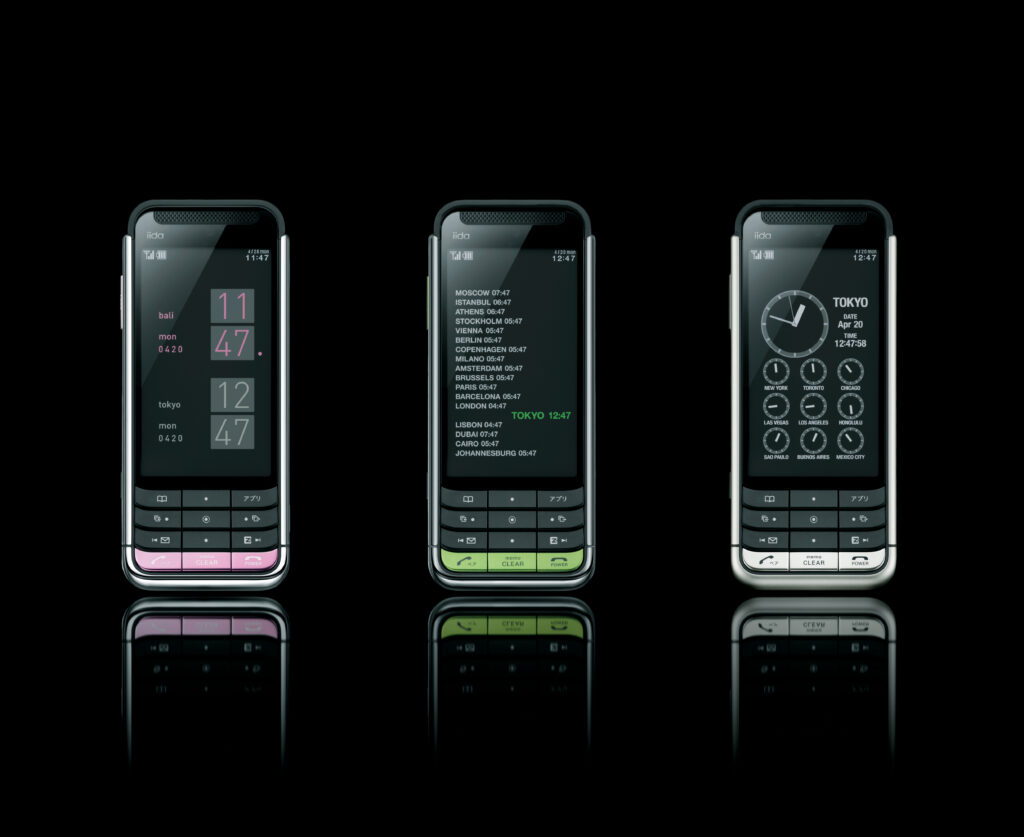
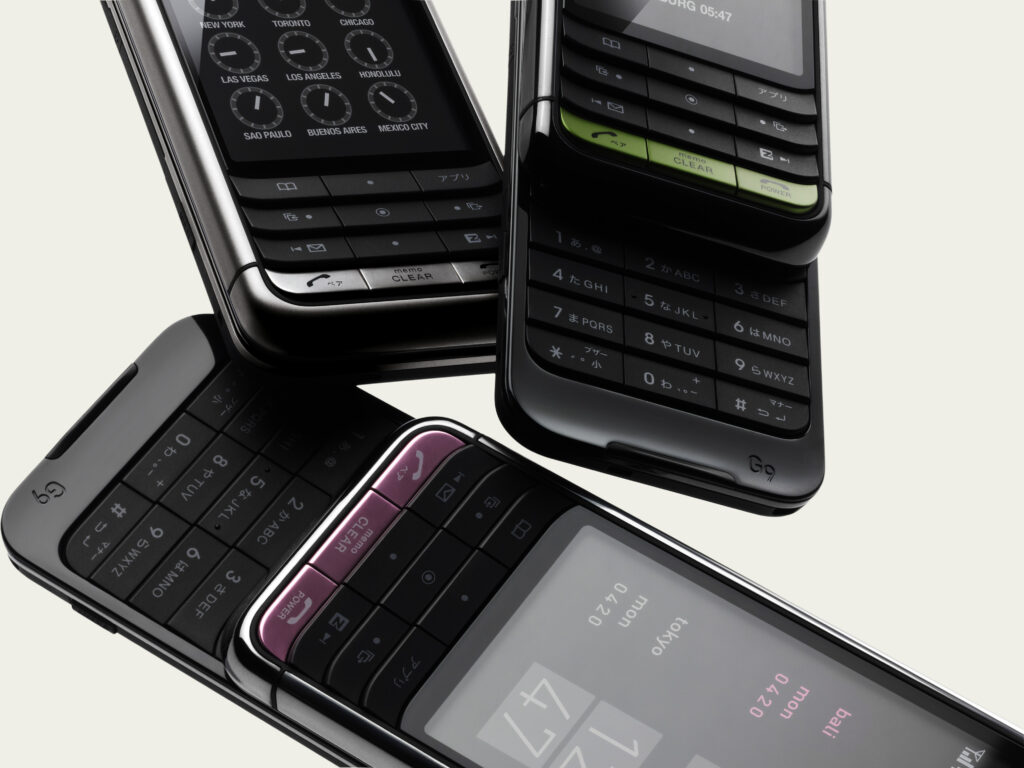
    au Design projectの携帯電話は海外からも高い評価を得ていましたが、どのモデルも国際ローミングには対応していなかったために海外では利用できませんでした。そこで、念願の海外対応を実現しようと企画したのがG9です。2001 年に発表したGRAPPAの「上質な道具」という思想を受け継ぐ海外対応機を目指し、GRAPPAとGLOBALの頭文字「G」と発売予定年である2009 年の「9」を組み合わせ、G9と命名しました。岩崎一郎さん × ソニー・エリクソンというコンビネーションが生み出した往年のソニーデザインを彷彿とさせる美しく精緻なデザインです。ステンレスフレームには、チタン化合物の薄膜コーティングが施され、アルミキーの差し色と組み合わされて上質感を演出しています。G9 の周辺機器として、当時としては革新的な超小型プロジェクターMobile pico projectorもデザインされました。au Design project 製品として開発が進められていましたが、iidaブランド開始によりその第1 弾モデルとしてデビューを飾りました。

    GRAPPA / GLOBAL / G9

    The mobile phones created through the au Design project were highly acclaimed overseas. However, none of the models supported international roaming, which meant they could not actually be used abroad. G9 was conceived to finally realize our long-held ambition of creating a phone that could be used internationally.

    The aim was to create a global handset that inherited the philosophy of GRAPPA, unveiled in 2001—the idea of a “high-quality tool.” The name G9 combined the “G” from GRAPPA and GLOBAL with the “9” from 2009, the year in which the phone was scheduled to launch.

    Created through the collaboration of designer Ichiro Iwasaki and Sony Ericsson, G9 featured a beautifully refined and precise design reminiscent of classic Sony design. Its stainless-steel frame was finished with a thin-film titanium compound coating, while contrasting aluminum keys added accents that enhanced its premium feel.
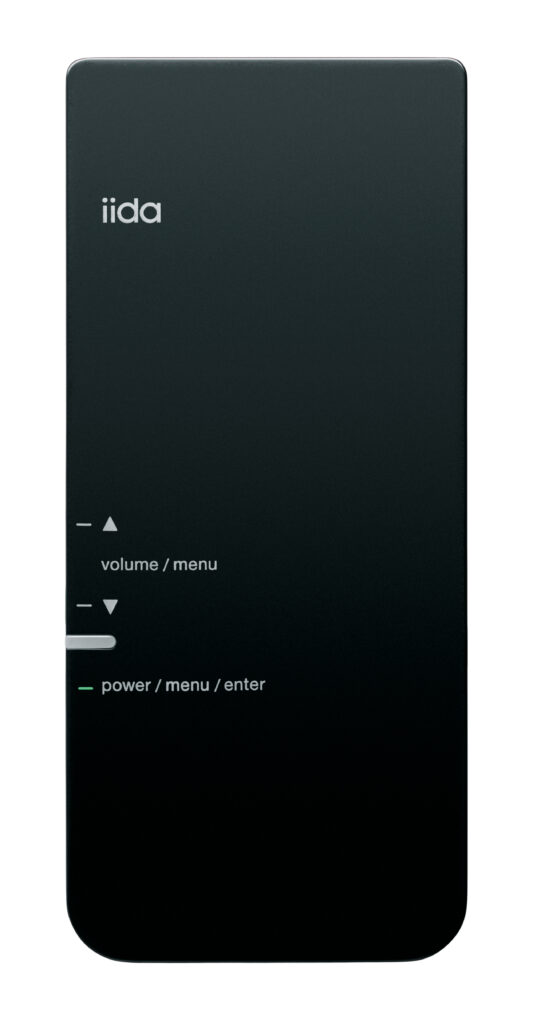
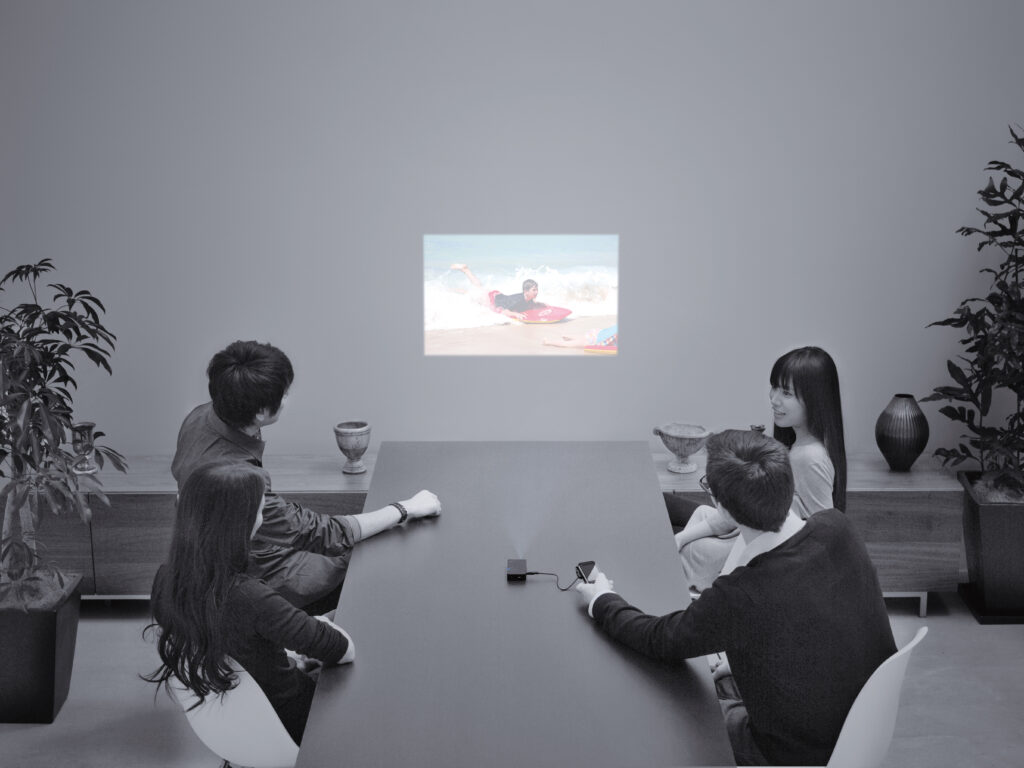
    The Mobile pico projector, an exceptionally compact and innovative projector for its time, was also designed as an accessory for G9.

    G9 was originally developed as an au Design project product, but with the launch of the iida brand, it ultimately made its debut as the brand’s very first model.


    Mobile pico projector

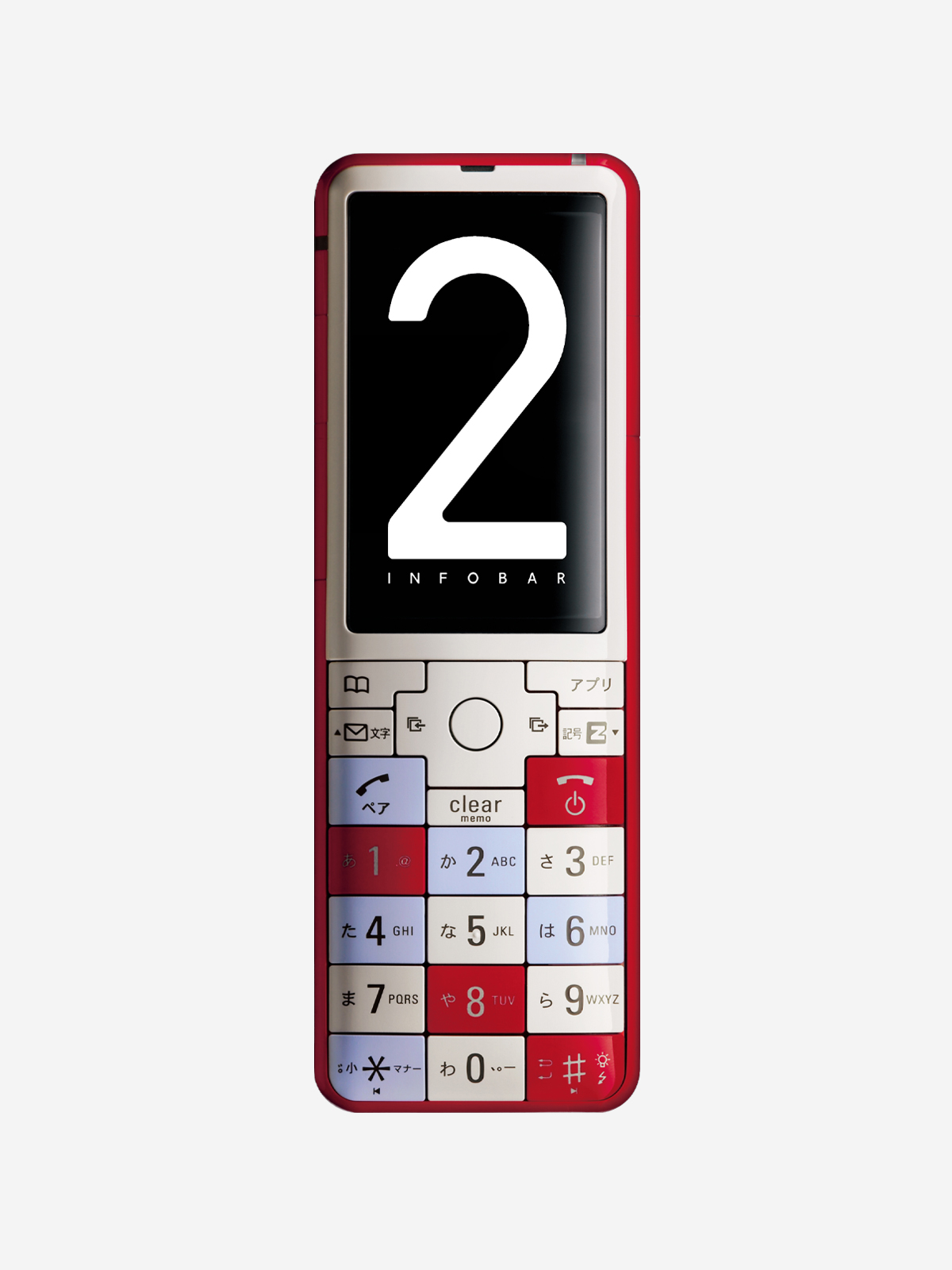
  • INFOBAR 2

    INFOBAR 2

    ANNOUNCEMENT DATE2007.09.26
    RELEASE DATE2007.12.01
    Brandau Design project
    TypeProduction Model
    DesignerNaoto Fukasawa
    ProducerSatoshi Sunahara
    ManufacturerSANYO Multimedia Tottori
    Size ( W x H x D ) / Weight47 × 138 × 15.5 mm / 104g
    MaterialsPlastic, electronic components

    COLOR VARIATIONS

    NISHIKIGOI
    WARM GRAY
    SILVER
    MIDORI

    AWARDS

    • 2008年度グッドデザイン賞 / Good Design Award 2008

    MUSEUM COLLECTIONS


    ABOUT

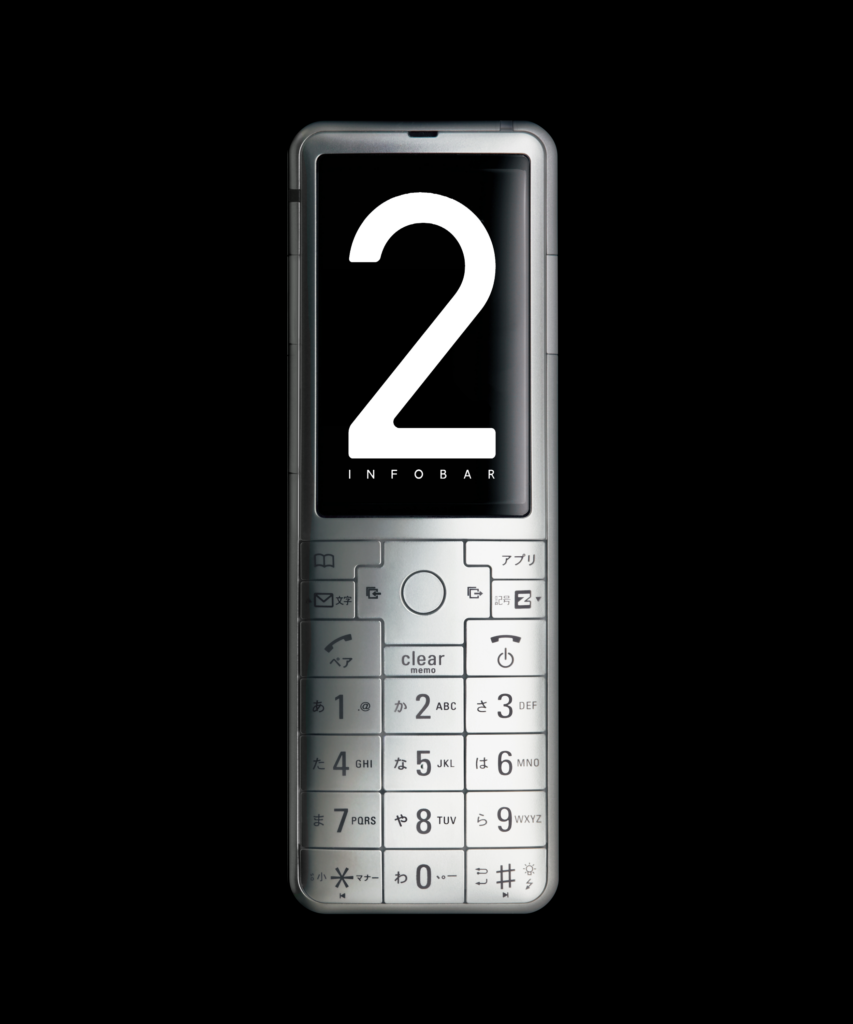
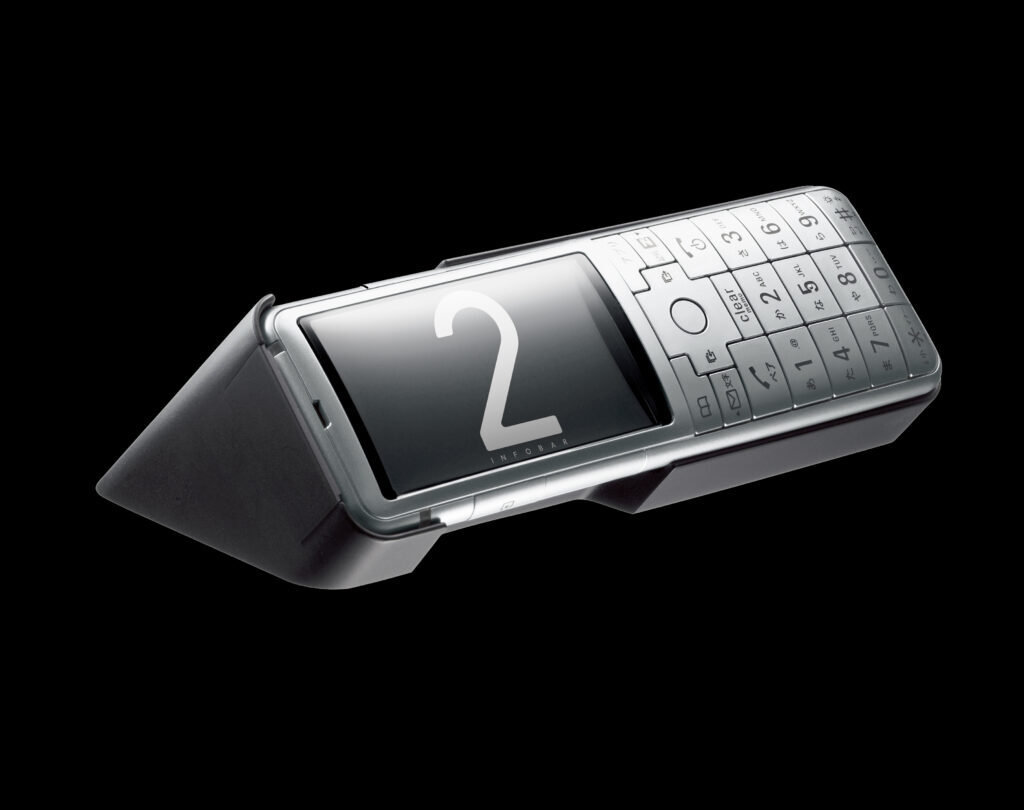
    au Design project の集大成

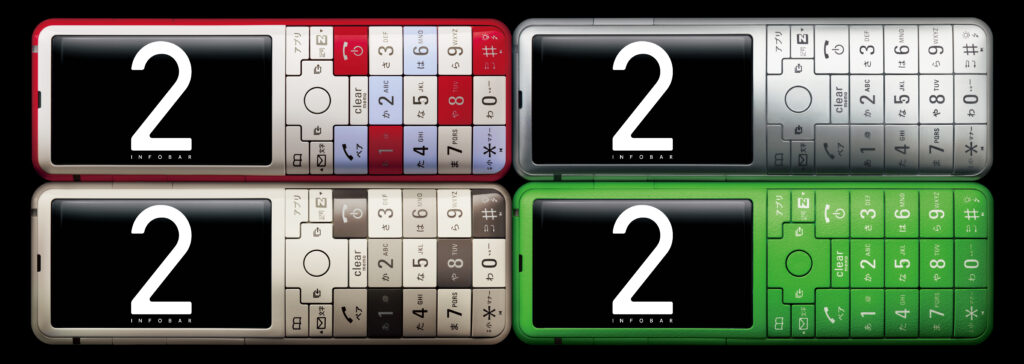
    身体が求めている丸くて優しい形。それをマスプロダクトとして現実化することは容易なことではありません。しかし、INFOBAR 2は、量産設計・製造を担当した鳥取三洋電機のエンジニア魂によって、2006 年に発表したコンセプトと寸分違わない再現性で量産化されたのでした。そのでき栄えはデザイン面でも技術面でもau Design project の集大成といえるものです。弧を描くディスプレイウィンドウはアクリル平板の曲げ加工で、背面側の曲面形状はバッテリーケースに角Rをつけることで実現しています。ワンセグアンテナは内蔵し、卓上ホルダ嵌合用の穴を本体から排除するため、卓上ホルダが筐体を抱え込む構造を考案するなど丸くて優しい形を損なわないためのあらゆる努力がなされています。MIDORI のみシボ加工が施され、CMF 面でも意欲的な製品でした。MEDIA SKIN 以前のモデルが、周波数再編による旧800MHz 帯停波で現在では使用できませんが、INFOBAR 2はau Design project 量産機の中で2017 年現在も使用できる唯一の端末です※。 ※執筆当時:現在は使用できません。

    The Culmination of au Design project

    A soft, rounded form that the human body instinctively responds to. Turning such a form into a mass-produced product, however, is no easy task. Yet thanks to the engineering expertise and dedication of Tottori Sanyo Electric, which was responsible for production engineering and manufacturing, INFOBAR 2 was mass-produced with a level of fidelity virtually identical to the concept model unveiled in 2006. In both design and engineering, the result can be regarded as the culmination of the au Design project.

    The gently curved display window was created by bending a flat acrylic sheet, while the curved surface on the back was achieved by rounding the corners of the battery cover. The One-Seg antenna was built into the body, and to eliminate the need for docking holes that would disrupt its smooth form, a desktop charging cradle was devised to wrap around and hold the handset itself. Every possible effort was made to preserve its soft, rounded shape.

    Only the MIDORI version featured a textured surface finish, making INFOBAR 2 an ambitious product in terms of CMF as well.

    Models released before MEDIA SKIN can no longer be used due to the shutdown of au’s former 800 MHz frequency band following spectrum reorganization. At the time of writing in 2017, however, INFOBAR 2 was the only mass-produced au Design project handset that could still be used.*
    *At the time of writing. INFOBAR 2 is no longer usable today.


    INFOBAR 2 グラフィックデザイン / INFOBAR 2 Graphic Design CD: Noriyuki Tanaka
    卓上ホルダ/Desktop Charging Cradle

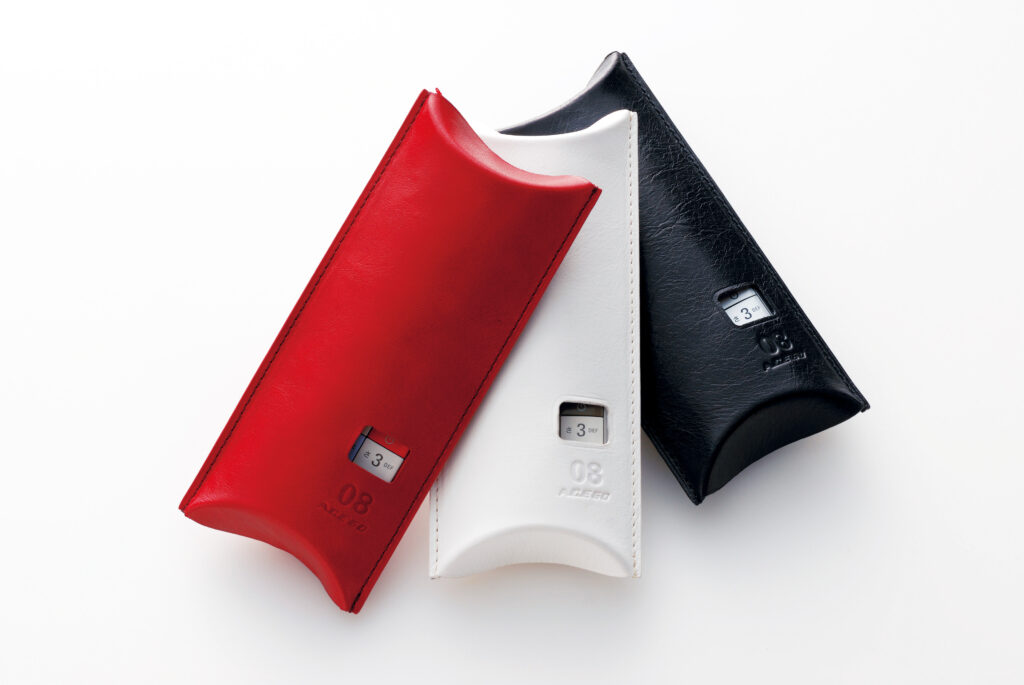
    ACE 60キャリングケース/ ACE 60 Carrying Case CD: Kenmei Nagaoka
  • MEDIA SKIN

    MEDIA SKIN

    ANNOUNCEMENT DATE2007.03.20 (PASTEL BLUE 05.14)
    RELEASE DATE2007.03.23
    Brandau Design project
    TypeProduction Model
    DesignerTokujin Yoshioka
    ProducerSatoshi Sunahara
    ManufacturerKYOCERA
    Size ( W x H x D ) / Weight50 × 110 × 13.1(maximum thickness 13.7) mm / 104g
    MaterialsPlastic, tempered glass display, electronic components

    COLOR VARIATIONS

    ORANGE / WHITE / BLACK / PASTEL BLUE(3000台限定 / Limited Edition of 3,000)


    AWARDS


    MUSEUM COLLECTIONS


    ABOUT

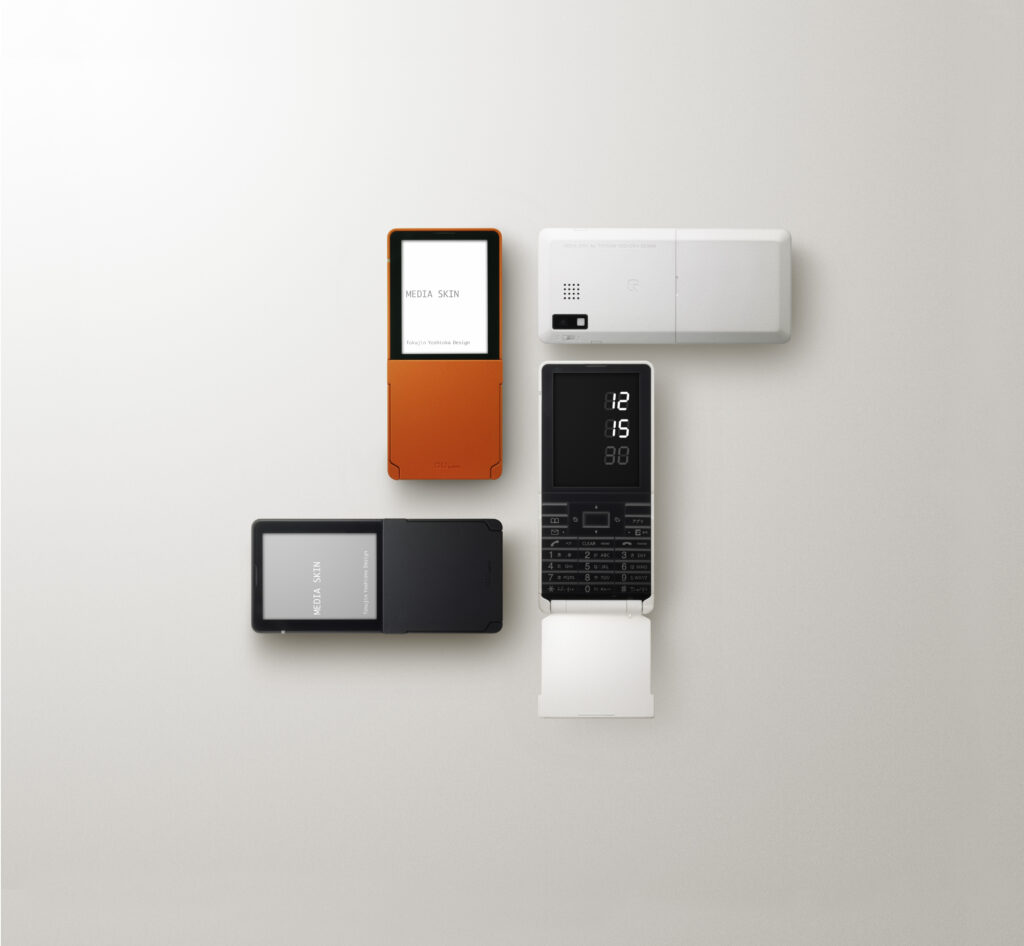
    「第二の皮膚」の量産

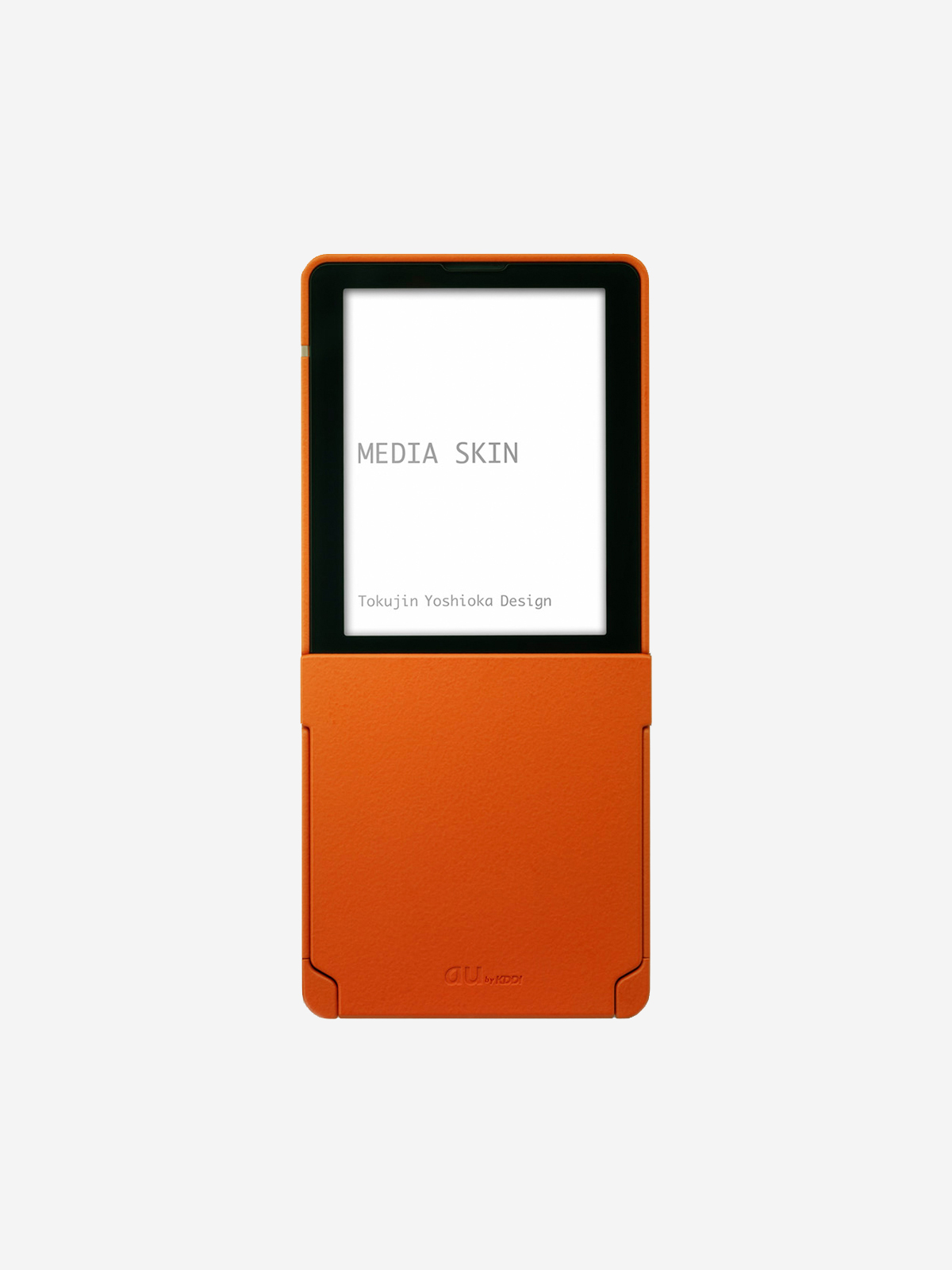
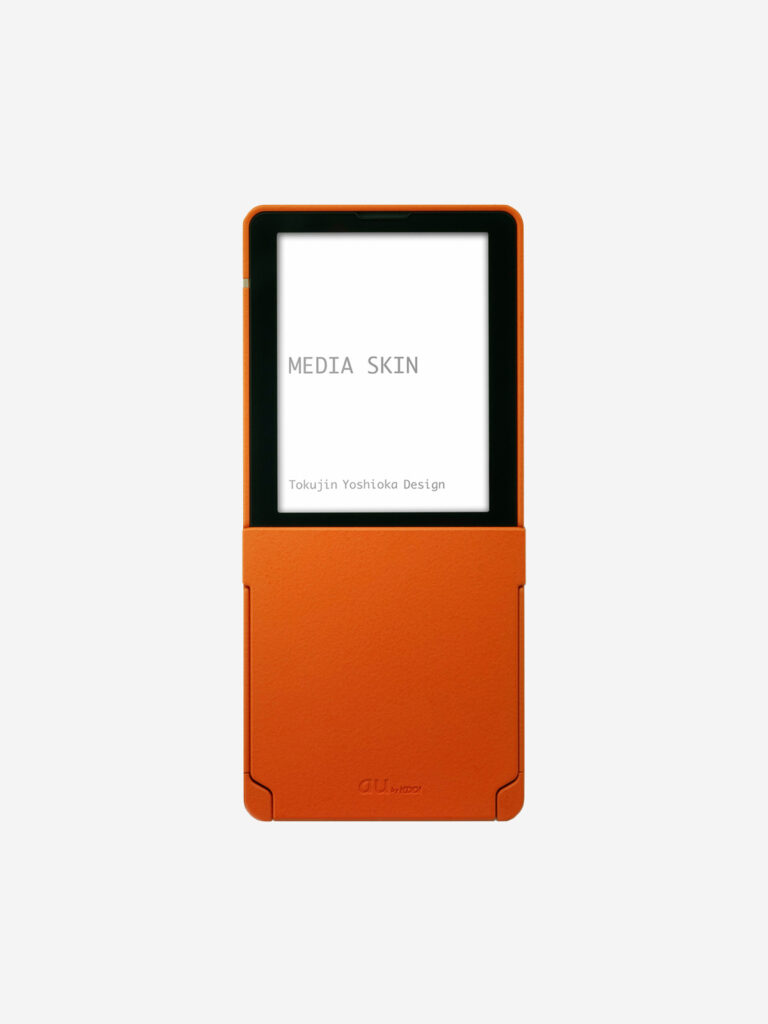
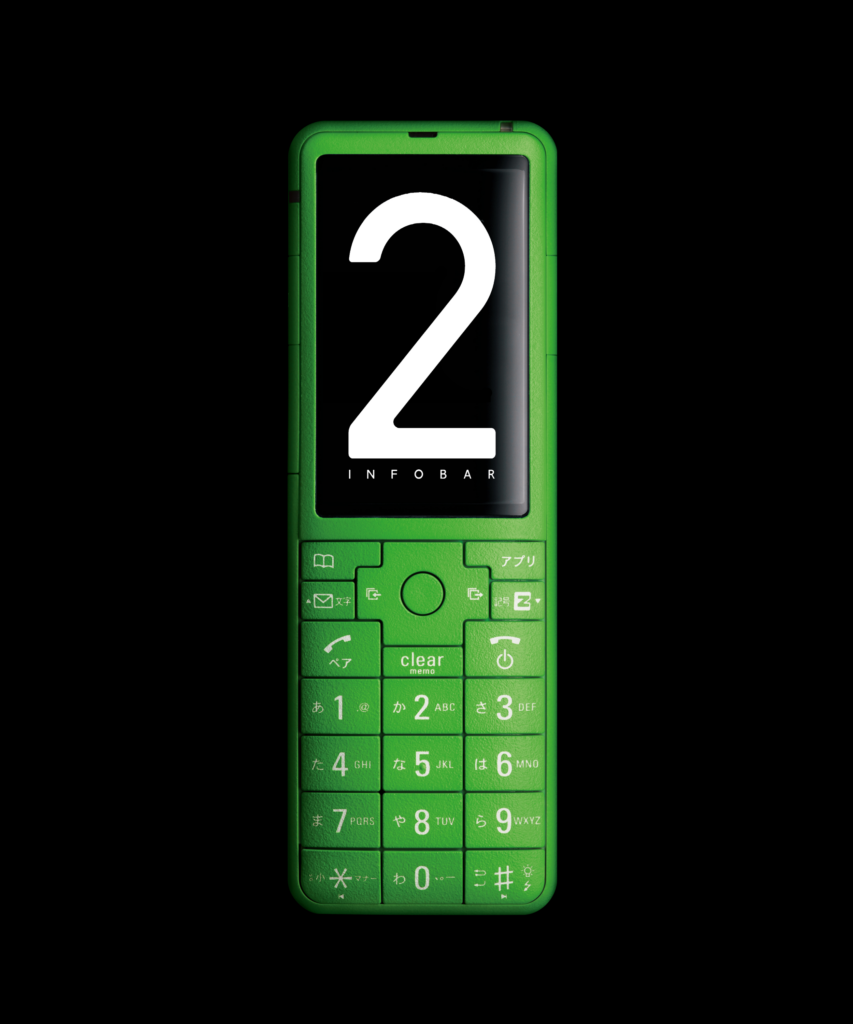
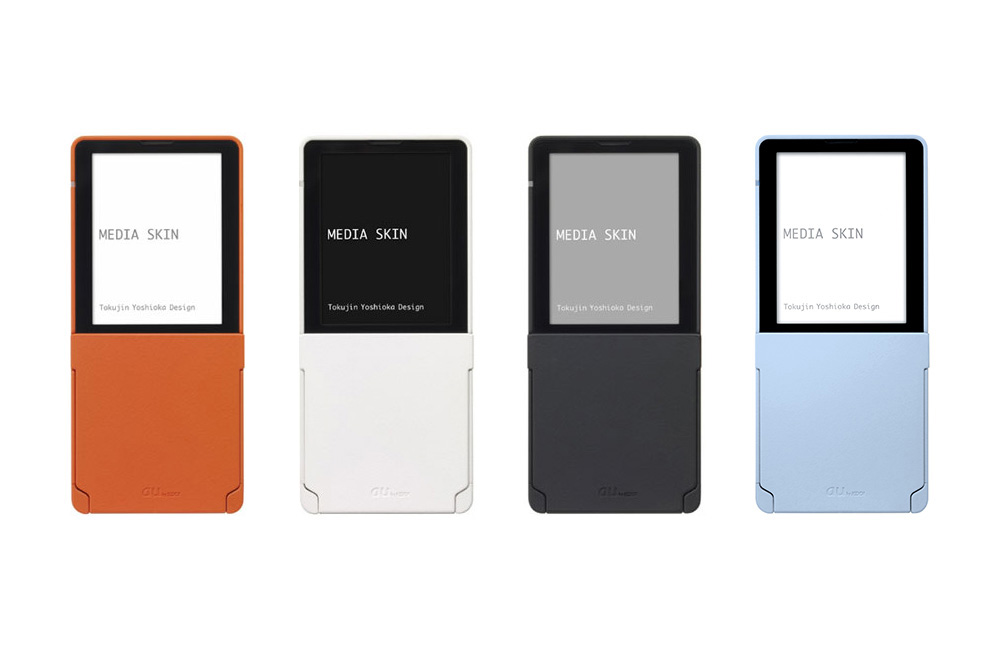
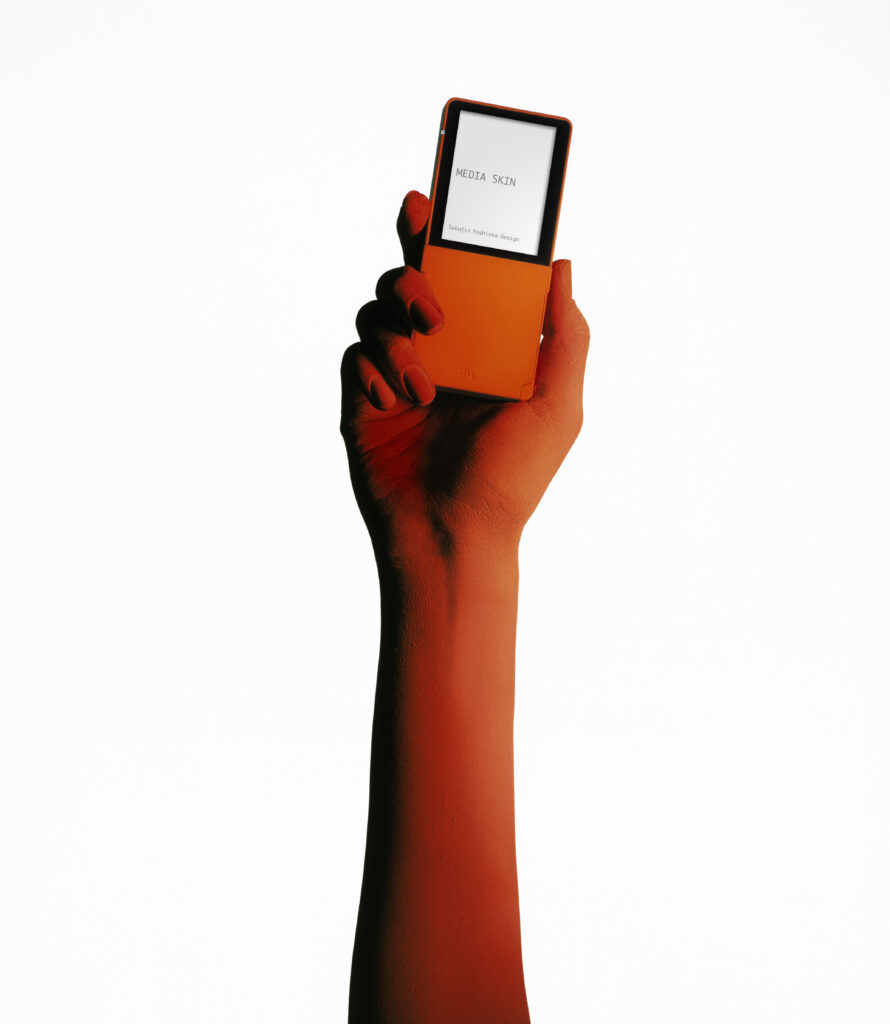
    「第二の皮膚」というコンセプトを裏切らない「触感」をいかに量産レベルで実現するか。従来から心地よい触感をもたらすソフトフィール塗料が存在していましたが、ウレタン粒子から作られるこの塗料は、経年劣化してベタベタしてしまう加水分解が課題でした。しかし、幸運なことにMEDIA SKIN の開発と時を同じくして、塗料メーカーから耐加水分解性を持った新しいソフトフィール塗料の提案が舞い込んできたのでした。これで「第二の皮膚」の実現性が見え、最終的にMEDIA SKIN のブラックはソフトフィール塗料とシボ加工を組み合わせ、他の色はシリコン粒子を配合した塗料を用いて、コンセプトに相応しい触感を実現しました。MEDIA SKINは世界初の有機EL ディスプレイを搭載し、ワンセグ・おサイフケータイ搭載機として当時最薄を記録するなど技術面でも注目を浴びました。MEDIA SKINが発表された2007 年1 月は、ニューヨーク近代美術館(MoMA)の永久収蔵品にINFOBAR、talby、neon、MEDIA SKINが選定され、初代iPhoneが米国で発表された時代の転換点でした。

    Mass-Producing the “Second Skin”

    How could we reproduce, at a mass-production level, a tactile quality that remained true to the concept of a “second skin”?

    Soft-touch coatings that provided a pleasant tactile feel already existed. However, these coatings, made with urethane particles, were prone to hydrolysis over time, causing their surfaces to become sticky. Fortunately, just as MEDIA SKINwas being developed, a paint manufacturer approached us with a new soft-touch coating that was resistant to hydrolysis.

    This breakthrough made the “second skin” concept technically feasible. For the black version of MEDIA SKIN, we ultimately combined a soft-touch coating with a finely textured surface finish, while the other colors used coatings containing silicone particles. Together, these treatments created a tactile experience worthy of the concept.

    MEDIA SKIN also attracted attention for its technological innovations. It featured the world’s first OLED display in a mobile phone and, at the time, was the thinnest handset to incorporate both One-Seg mobile TV and Osaifu-Keitai mobile payment functionality.

    January 2007, when MEDIA SKIN was unveiled, marked a turning point in the history of the mobile phone. INFOBAR, talby, neon, and MEDIA SKIN were selected for the permanent collection of the Museum of Modern Art (MoMA) in New York, while the original iPhone was unveiled in the United States that same month.


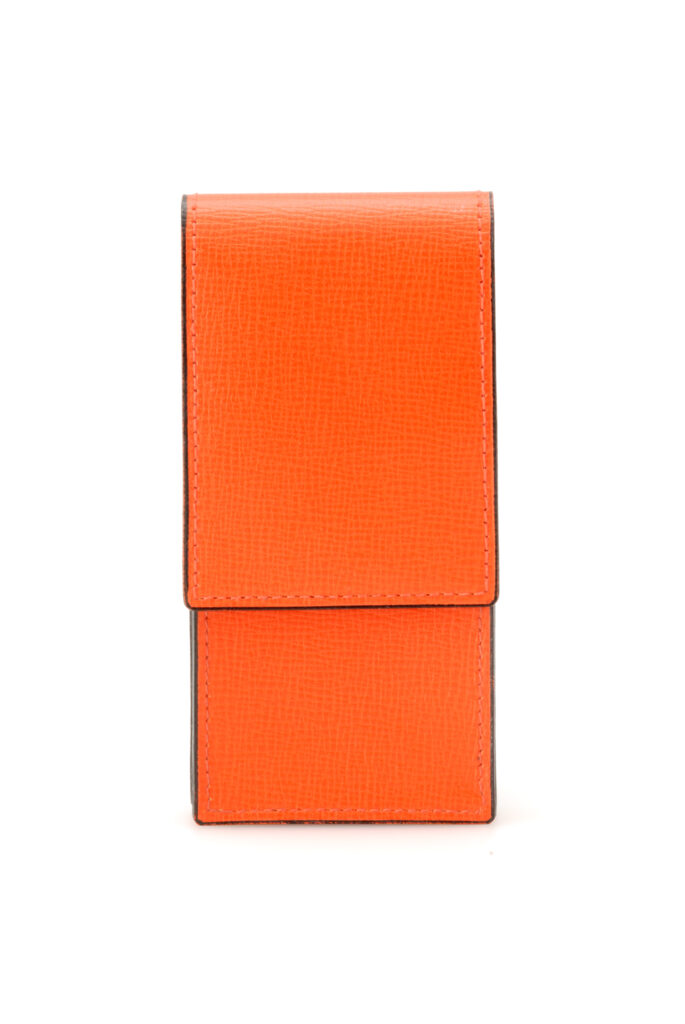
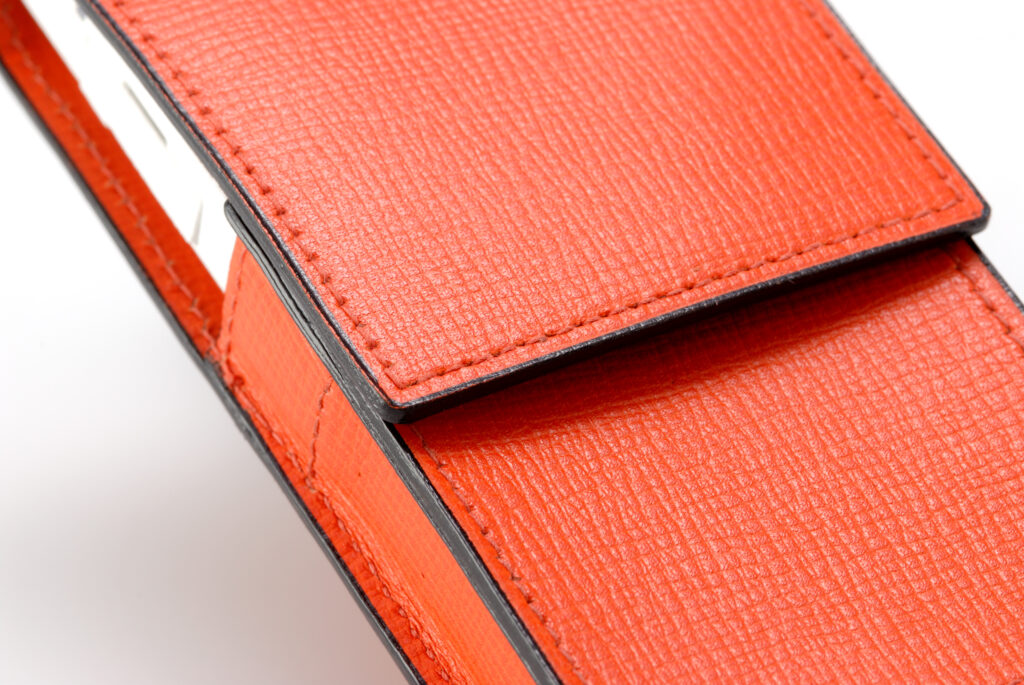
    Valextra 製MEDIA SKINキャリングケース / MEDIA SKIN Carrying Case by Valextra
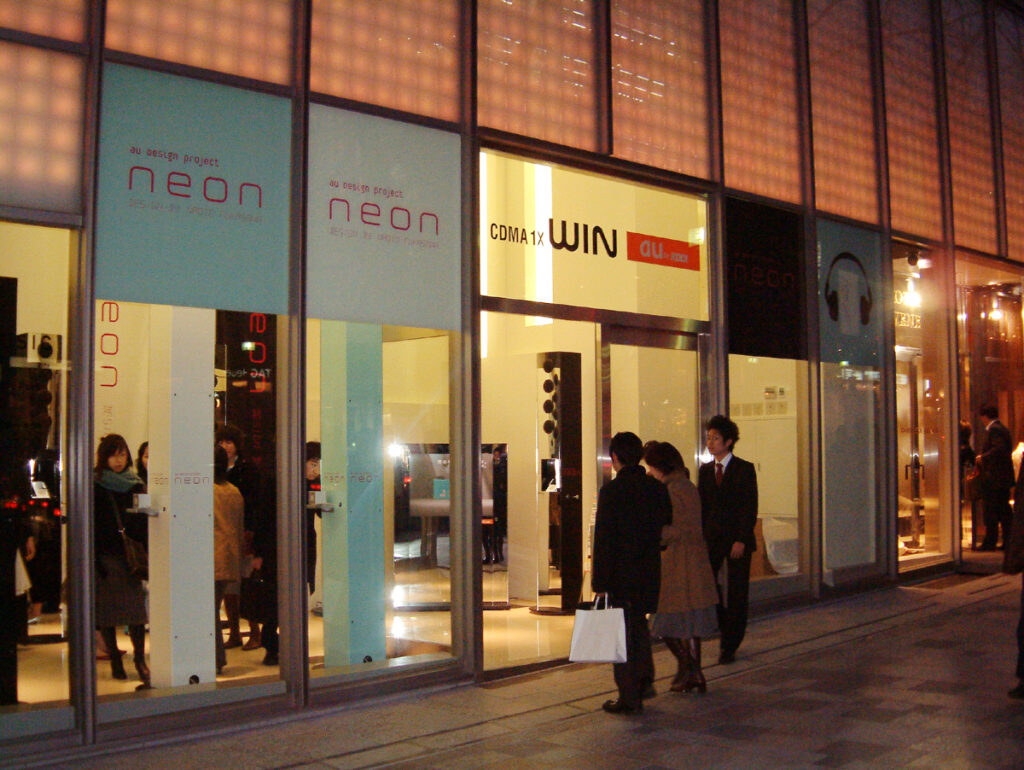
  • neon

    neon

    ANNOUNCEMENT DATE2004.10.13
    RELEASE DATE2004.11.23
    Brandau Design project
    TypeProduction Model
    DesignerNaoto Fukasawa
    ProducerSatoshi Sunahara
    ManufacturerTOSHIBA
    Size ( W x H x D ) / Weight50 × 89 × 23 mm / 125g
    MaterialsPlastic, electronic components

    COLOR VARIATIONS

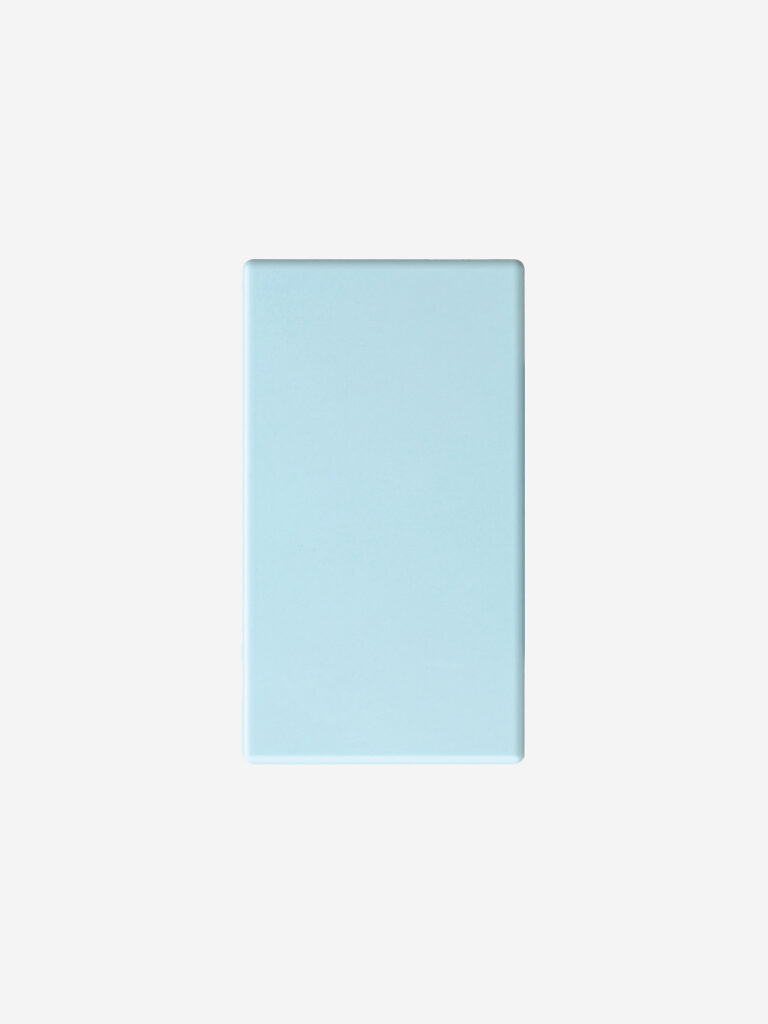
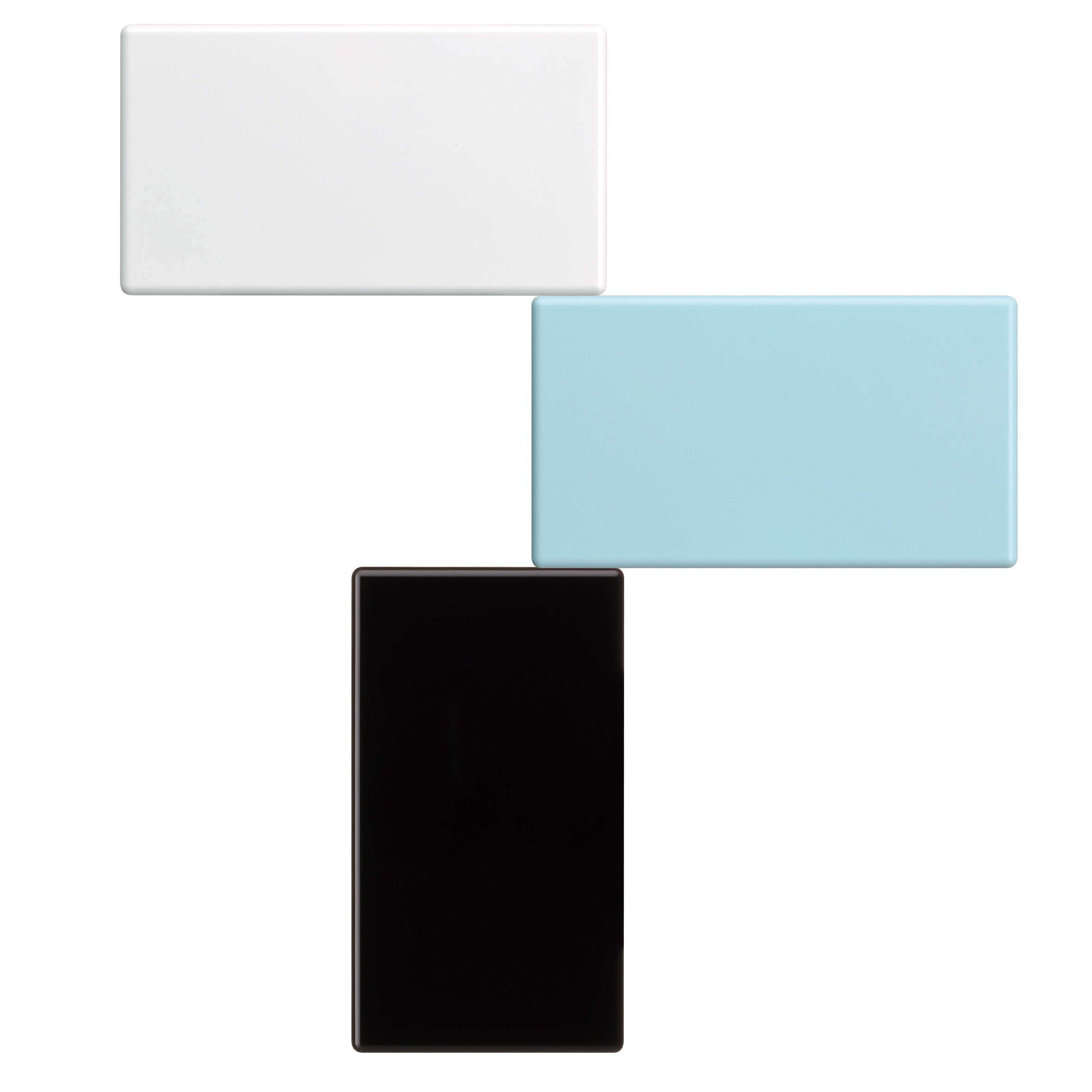
    shiro / mizuiro / kuro


    AWARDS

    • 2006年度グッドデザイン賞 / Good Design Award 2006

    MUSEUM COLLECTIONS


    ABOUT

    マジカルなインターフェース

    2004 年のコンセプト「ITA」をベースに、au の音楽配信サービス「LISMO」開始に合わせて商品化されました。積み木のように美しい板が二枚重なっているだけに見える工業製品らしからぬシンプルなデザインは、スライド金型による成形と表から見えないヒンジを採用することで実現しています。そして何もないところから赤いLED 表示がくっきり浮かびあがるマジカルなインターフェース。8 文字表示の16セグメントLEDユニットが二つ搭載されていますが、非点灯時に全くその存在を感じさせない透過と隠蔽の絶妙なバランスを極めた筐体設計がなされています。音楽プレーヤー、FMラジオ、時刻などの表示に加え、開閉時にはユーモア溢れるLEDアニメ(142 種類)がランダムに表示されます。卓上ホルダに載せることでインテリアに溶け込む置き時計や音楽プレイヤーに変わります。携帯電話を携帯しない時間もデザインした携帯電話です。

    A Magical Interface

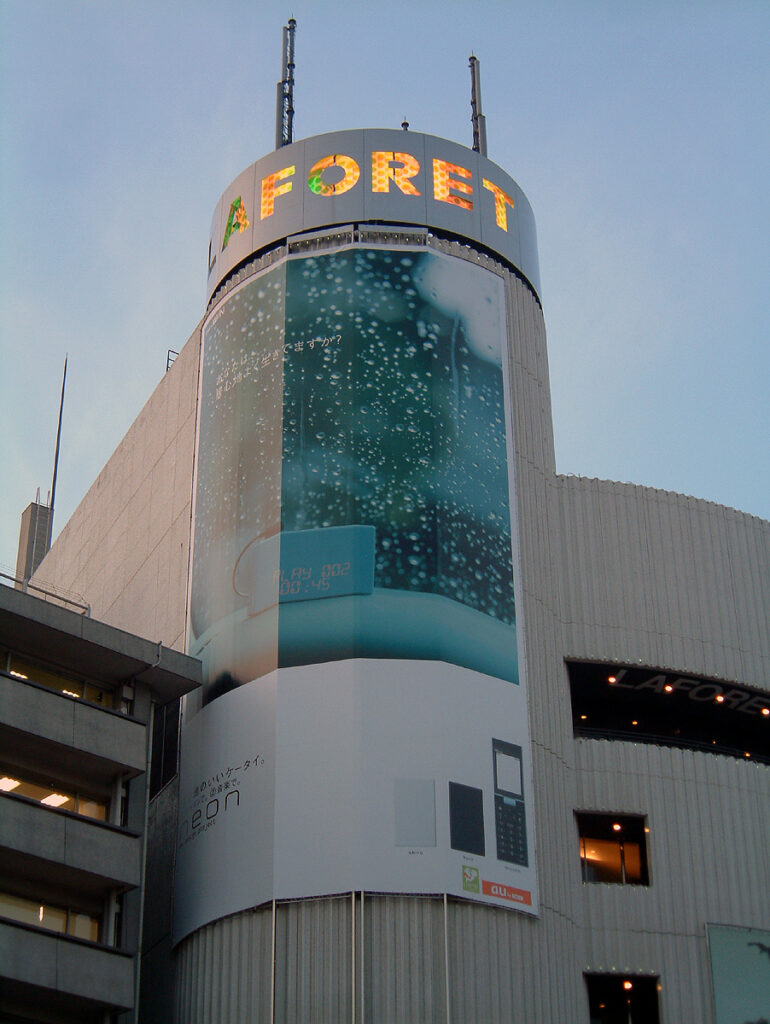
    Based on the 2004 concept model “ITA,” this phone was brought to market to coincide with the launch of au’s LISMO music distribution service.

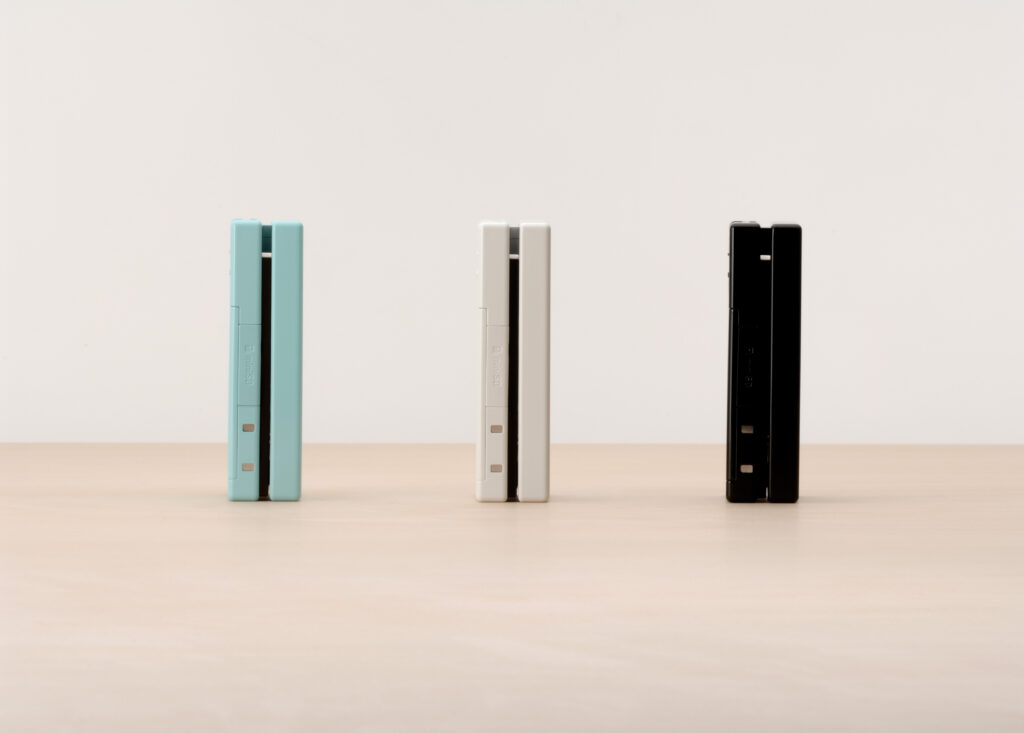
    Its remarkably simple design—two beautifully proportioned slabs that appear to be stacked together like building blocks—looks unlike a conventional industrial product. This was made possible through the use of slide-mold construction and a hinge mechanism concealed from view.

    Then there is the magical interface: vivid red LED characters suddenly emerge from what appears to be a completely blank surface. The phone incorporates two 8-character, 16-segment LED units, while the body was meticulously engineered to achieve a delicate balance between transparency and concealment, leaving no visible trace of the displays when they are turned off.

    In addition to information such as the music player, FM radio, and time, one of 142 playful LED animations appears at random whenever the phone is opened or closed.

    Placed in its desktop charging cradle, the phone transforms into a clock or music player that blends naturally into the interior. It was a mobile phone designed not only for the time you carried it with you, but also for the time you didn’t.