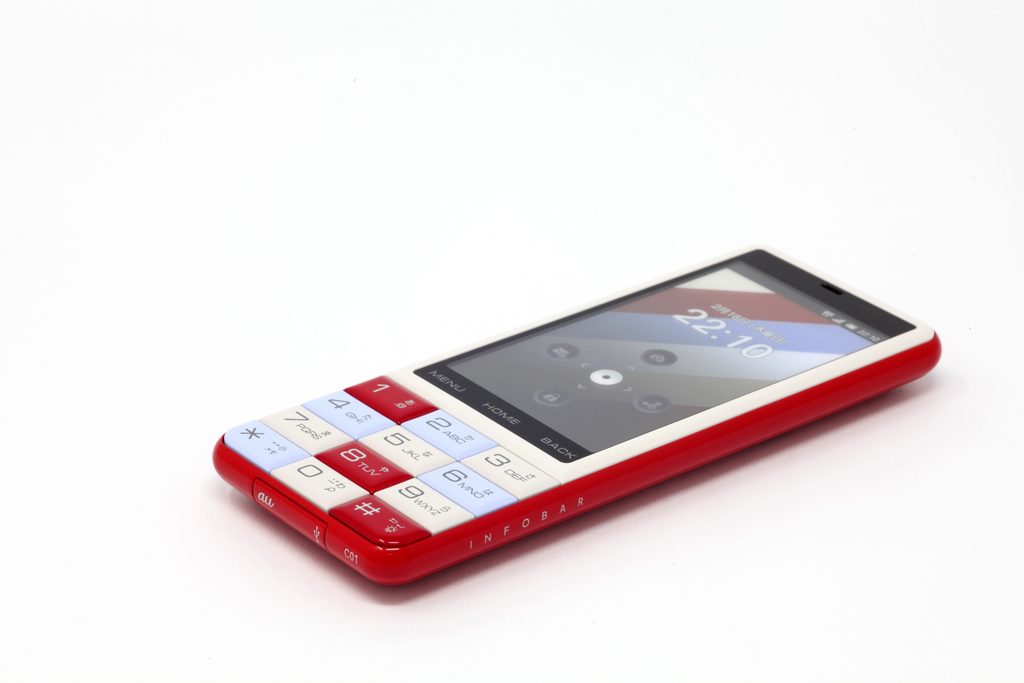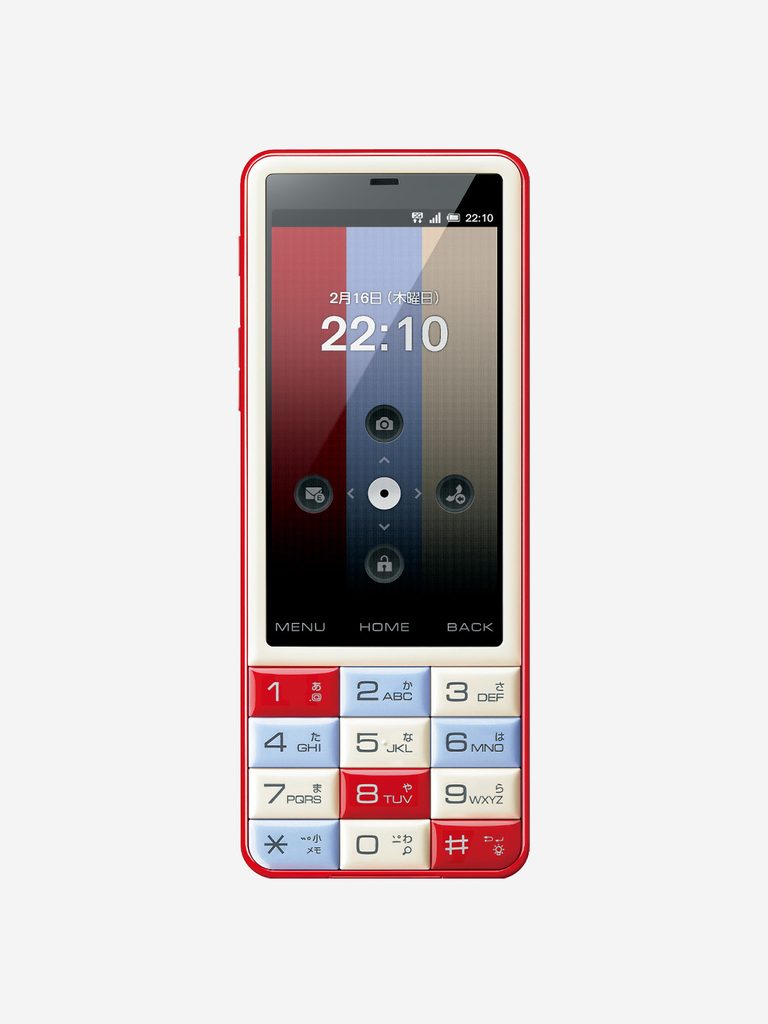
| ANNOUNCEMENT DATE | 2012.01.16 |
| RELEASE DATE | 2012.02.03 |
| Brand | iida |
| Type | Production Model |
| Designer | Product: Naoto Fukasawa UI: Yugo Nakamura |
| Producer | Satoshi Sunahara |
| Manufacturer | SHARP |
| Size ( W x H x D ) / Weight | 52 × 130 × 12.3(maximum thickness 12.5) mm / 106g |
| Materials | Plastic, tempered glass display, electronic components |
COLOR VARIATIONS
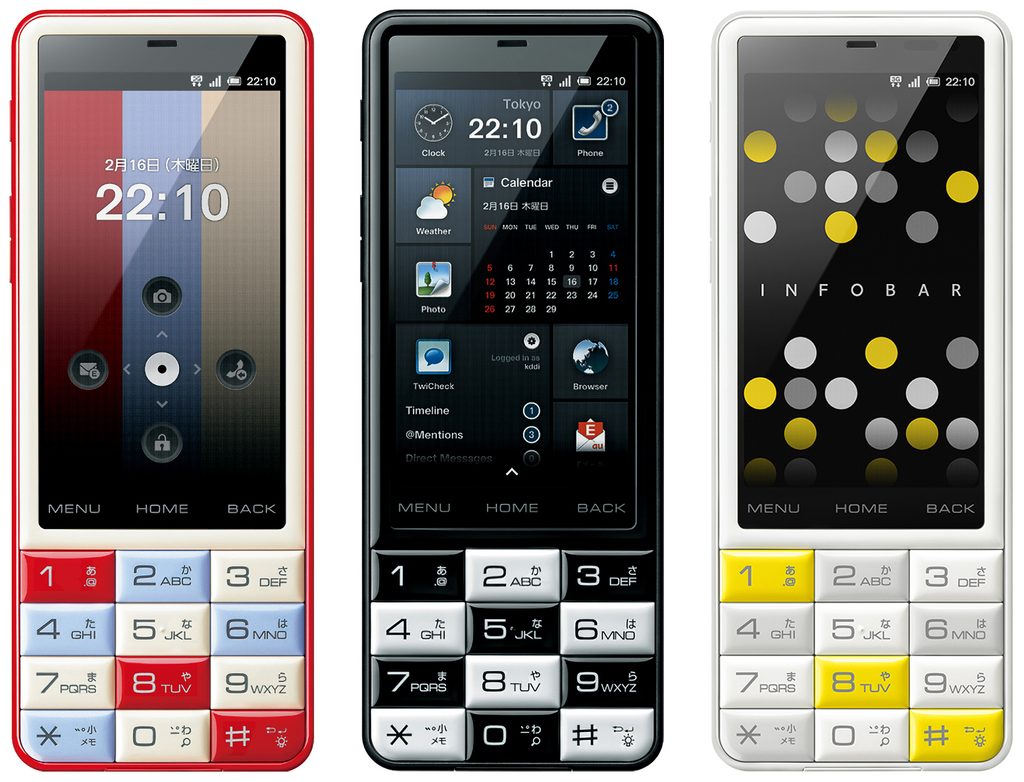
NISHIKIGOI / ICHIMATSU / KIIRO
AWARDS
- 2012年度グッドデザイン賞 / Good Design Award 2012
MUSEUM COLLECTIONS
ABOUT
「手」とスマホ
携帯電話の設計にあたっては幅49mmが手にしっくりくる最適値とされていました。ディスプレイが大型化するにつれて理想的な幅の実現が困難になっても、なんとか50mm台前半に収めようと、デザイナーもエンジニアもコンマ1mmの戦いに挑んでいました。スマートフォンはそんな概念を一気に吹き飛ばし、60mmを超える幅が当たり前になりました。指先の記憶で見ずに打てたキーも、タッチパネルを見ないと打てなくなりました。「視覚」や「脳」が優先されるスマートフォン。「手」や「身体性」を大切にしていた携帯電話。携帯電話の良さを残しながらスマートフォン化を試みたのがINFOBAR C01です。幅は52mm、INFOBARらしいタイルキーもそのままです。
The “Hand” and the Smartphone
In mobile phone design, a width of 49 mm was considered ideal for fitting comfortably in the hand. As displays grew larger and achieving that ideal width became increasingly difficult, designers and engineers fought over every tenth of a millimeter in an effort to keep the width within the low-50 mm range.
Smartphones swept away that notion almost overnight, and widths exceeding 60 mm quickly became the norm. Physical keys that could once be operated without looking, guided by the memory of one’s fingertips, gave way to touchscreens that demanded visual attention.
Smartphones prioritize vision and the brain. Mobile phones placed greater importance on the hand and our physical relationship with the device.
INFOBAR C01 was an attempt to create a smartphone while preserving these qualities of the mobile phone. At just 52 mm wide, it retained the distinctive tile keys that had become an INFOBAR signature.